

url
stringlengths 67
81
| content
stringlengths 8.48k
104k
|
|---|---|
https://www.africanhistoryextra.com/p/a-19th-century-african-philosopher
|
Published Time: 2021-10-10T10:22:21+00:00
A 19th century African philosopher: the biography and philosophical writings of Abd Al-Qadir Ibn Al-Mustafa (Dan Tafa)
===============
[](https://www.africanhistoryextra.com/)
[African History Extra](https://www.africanhistoryextra.com/)
=============================================================
Subscribe Sign in

Discover more from African History Extra
All about African history; narrating the continent's neglected past
Over 15,000 subscribers
Subscribe
By subscribing, I agree to Substack's [Terms of Use](https://substack.com/tos), and acknowledge its [Information Collection Notice](https://substack.com/ccpa#personal-data-collected) and [Privacy Policy](https://substack.com/privacy).
Already have an account? [Sign in](https://www.africanhistoryextra.com/p/a-19th-century-african-philosopher)
A 19th century African philosopher: the biography and philosophical writings of Abd Al-Qadir Ibn Al-Mustafa (Dan Tafa)
======================================================================================================================
### including the three philosophical works attributed to him
[](https://substack.com/@isaacsamuel)
[isaac Samuel](https://substack.com/@isaacsamuel)
Oct 10, 2021
5
Share
**On Philosophy in Africa**
Philosophy is simply defined as "the love of wisdom" and like all regions, Africa has been (and still is) home to various intellectual traditions and discourses of philosophy. Following Africa's “triple heritage”; some of these philosophical traditions were autochthonous, others were a hybrid of Islamic/Christian and African philosophies and the rest are Europhone philosophies[1](https://www.africanhistoryextra.com/p/a-19th-century-african-philosopher#footnote-1-42388787)
While the majority of African philosophical traditions from the first category (such as Ifa) were not transcribed into writing before the modern era, the second category of African philosophical traditions (such as Ethiopian philosophy and Sokoto philosophy) were preserved in both written and oral form, and among the written African Philosophies, the most notable works are of the 17th century Ethiopian philosopher Zera Yacob, eg the '_Hatata_'[2](https://www.africanhistoryextra.com/p/a-19th-century-african-philosopher#footnote-2-42388787)and the works of Sokoto philosopher Abd Al-Qādir Ibn Al-Mustafa (Dan Tafa) the latter of whom is the subject of this article
* * *
**Support AfricanHistoryExtra by becoming a member of our Patreon community, subscribe here to read more about African history, download free books, and keep this newsletter free for all:**
[PATREON](https://www.patreon.com/isaacsamuel64)
* * *
**Biography of Dan Tafa: west Africa during the Age of revolution**
West Africa at the time of Dan Tafa birth was in the midst of a political revolution led by highly learned groups of scholars that overthrew the older established military and religious elites, leading to the foundation of the empires of Sokoto in 1806 led by Uthman dan Fodio and the empire of Hamdallayi in 1818 led by Amhad Lobbo, among other similar states.
_**Birth and Education**_
Dan Tafa was born in 1804, during the migration of Uthman Dan Fodio's followers which preceded the establishment of the Sokoto empire, he was born to Mallam Tafa and Khadija, both of whom were scholars in their own right. Mallam Tafa was the advisor, librarian and the 'leader of the scribes' (_kuutab_) in Uthman's _Fodiyawa_ clan (an extended family of scholars that was central in the formation of the Sokoto empire) and he later became the secretary (_kaatib_) of the Sokoto empire after having achieved high education in Islamic sciences, he also established a school in Salame ( a town north of Sokoto; the eponymously named capital city of the empire, which is now in northern Nigeria) where he settled, the school was later run by his son Dan Tafa.[3](https://www.africanhistoryextra.com/p/a-19th-century-african-philosopher#footnote-3-42388787) Khadija was also a highly educated scholar, she wrote more than six works[4](https://www.africanhistoryextra.com/p/a-19th-century-african-philosopher#footnote-4-42388787) in her Fulfulde language on a wide of subjects including eschatology and was the chief teacher of women in the _Fodiyawa_ her most notable student being Nana Asmau; the celebrated 19th century poetess and historian[5](https://www.africanhistoryextra.com/p/a-19th-century-african-philosopher#footnote-5-42388787)
**Dan Tafa’s Studies**
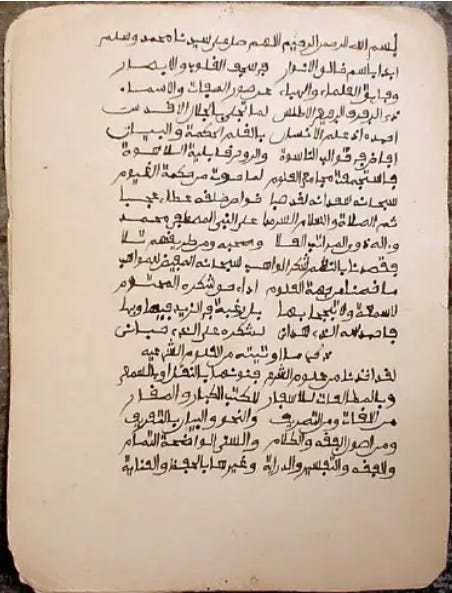
Dan Tafa studied and wrote about a wide range of disciplines as he wrote in his _‘Shukr al-Wahib fi-ma Khassana min al-'ulum’_ (Showing Gratitude to the Benefactor for the Divine Overflowing Given to Those He Favors) in which he divides his studies into 6 sections, listing the sciences which he mastered such as the natural sciences that included; medicine (_tibb_), physiognomy (_hai'at_), arithmetic (_hisaab_), and astronomy (_hikmat 'l-nujuum_), the sciences of linguistics (_lughat_), verbal conjugation (_tasrif_), grammar (_nahwa_), rhetoric (_bayaan_), and various esoteric and gnostic sciences the list of which continues,[6](https://www.africanhistoryextra.com/p/a-19th-century-african-philosopher#footnote-6-42388787) plus the science of Sufism (_tasawwuf_). It was in the latter discipline that he was introduced to Falsafa (philosophy) under his main tutor Muhammad Sanbu (his maternal uncle), about who he writes:
_**"As for Shaykh Muḥammad Sanbu, I took from him the path of Taṣawwuf, and transmitted from him some of the books of the Folk (the Sufis) as well as their wisdom, after he had taken this from his father, Shaykh ‘Uthmān; like the Ḥikam (of Ibn ‘Aṭā’ Allāh al-Iskandarī), and the Insān al-Kāmil (of ‘Abd al-Karīm al-Jīlī), and others as well as the states of the spiritual path."**_[7](https://www.africanhistoryextra.com/p/a-19th-century-african-philosopher#footnote-7-42388787)
In summary, "Dan Tafa was raised in the extraordinary milieu of the founding and early years of the Sokoto Caliphate exposed to virtually all of the Islamic sciences transmitted in West Africa at the time, from medicine, mathematics, astronomy, geography, and history, jurisprudence, to logic, philosophy, Sufism".
_Folio from the ‘Shukr al-Wahib fi-ma Khassana min al-'ulum’ from a private collection in Maiurno, Sudan_
[](https://substackcdn.com/image/fetch/$s_!PkJB!,f_auto,q_auto:good,fl_progressive:steep/https%3A%2F%2Fbucketeer-e05bbc84-baa3-437e-9518-adb32be77984.s3.amazonaws.com%2Fpublic%2Fimages%2F2cd286c4-370e-49ae-addc-9664723e7156_452x593.png)
* * *
[Share](https://www.africanhistoryextra.com/p/a-19th-century-african-philosopher?utm_source=substack&utm_medium=email&utm_content=share&action=share)
* * *
**Dan Tafa’s writings**
Dan Tafa wrote on a wide range of subjects and at least 72 of his works are listed in John Hunwick's “_Arabic Literature of Africa vol.2_” catalogue (from pgs 222-230) .His most notable works are on history, for which he is best remembered, especially the‘_Rawdat al-afkar_’ (The Sweet Meadows of Contemplation) written in 1824 and the ‘_Mawsufat al-sudan_’ (Description of the black lands) written in 1864; both of which include a fairly detailed account on the history of west Africa, he also wrote works on geography such as the‘_Qataif al-jinan’_ (The Fruits of the Heart in Reflection about the Sudanese Earth (world)"[8](https://www.africanhistoryextra.com/p/a-19th-century-african-philosopher#footnote-8-42388787) which included a very detailed account of the topography, states, history and culture of west Africa and the Maghreb, and even more notably, he wrote _‘Jawāb min 'Abd al-Qādir al-Turudi ilā Nūh b. al-Tâhir’_ (Abd al-Qādir al-Turūdī's response to Nüh b. alTāhir); a meticulous refutation of the _Risāla_ of Nuh Al-Tahir, in which the latter, who is described as "the doppelgänger of Dan Tafa in the Ḥamdallāhi empire", was trying to legitimize the status of Ḥamdallāhi’s ruler Ahmad Lobbo, as the prophesied "12th caliph" by heavily altering the _Tārīkh al-fattāsh_; a famous 17th century Timbuktu chronicle on west African history[9](https://www.africanhistoryextra.com/p/a-19th-century-african-philosopher#footnote-9-42388787).
Dan Tafa had thus established himself as the most prominent and prolific writer and thinker of Sokoto such that by the time of German explorer Heinrich Barth's visit to Sokoto in 1853, Dan Tafa was considered by his peers and Barth as:
"the most learned of the present generations of the inhabitants of Sokoto… The man was Abde Kader dan Tafa …on whose stores of knowledge I drew eagerly"[10](https://www.africanhistoryextra.com/p/a-19th-century-african-philosopher#footnote-10-42388787)
_Folio in the ‘Rawdat al-afkar’, from a private collection in Maiurno, Sudan_
[](https://substackcdn.com/image/fetch/$s_!ylvO!,f_auto,q_auto:good,fl_progressive:steep/https%3A%2F%2Fbucketeer-e05bbc84-baa3-437e-9518-adb32be77984.s3.amazonaws.com%2Fpublic%2Fimages%2F023b7073-56e6-41b9-9449-489ab3c7f8f1_485x623.png)
_Folio in the ‘Mawsufat al-sudan’, from a private collection in Maiurno, Sudan_
[](https://substackcdn.com/image/fetch/$s_!V-Kr!,f_auto,q_auto:good,fl_progressive:steep/https%3A%2F%2Fbucketeer-e05bbc84-baa3-437e-9518-adb32be77984.s3.amazonaws.com%2Fpublic%2Fimages%2Fa7b4ee12-69a0-4863-8a23-8dcbe10a418c_547x775.png)
* * *
[free subscription](https://isaacsamuel.substack.com/subscribe?)
* * *
**The Philosophical writings of Dan Tafa**
Above all else, it was his writings on philosophy that set him apart from the rest of his peers; in 1828 he wrote first philosophical work titled '_Al-Futuhat al-rabbaniyya_' (The divine Unveilings) described by historian Muhammad Kani as: "a critical evaluation of the materialists, naturalists and physicists' perception of life … matters relating to the transient nature of the world, existence or non-existence of the spirit, and the nature of celestial spheres, are critically examined in the work"[11](https://www.africanhistoryextra.com/p/a-19th-century-african-philosopher#footnote-11-42388787)
He followed this up with another philosophical work titled '_Kulliyāt al-‘ālam al-sitta_' ('The Sixth World Faculty) that is described by professor Oludamini as: "a brief but dense philosophical poem about the origins, development, resurrection, and end of the body, soul, and spirit, as well as a discussion of _hyle_ (prime matter)"[12](https://www.africanhistoryextra.com/p/a-19th-century-african-philosopher#footnote-12-42388787) and later in his life, he wrote the'_Uhud wa-mawāthiq_ (Covenants and Treaties) in 1855. which is a short treatise written in a series of 17 oaths taken by the author, its described by Muhammad Kani as: "an apologia to his critics among the orthodox scholars who viewed philosophy with skepticism"[13](https://www.africanhistoryextra.com/p/a-19th-century-african-philosopher#footnote-13-42388787).
According to Muhammad Kani and John Hunwick, these three works fit squarely within the genre called Falsafa ie; Islamic philosophy. Falsafa isn't to be understood as a philosophy directly coming out of Islam but rather one that was built upon centuries of various philosophical traditions including Greek, Roman, Persian philosophy[14](https://www.africanhistoryextra.com/p/a-19th-century-african-philosopher#footnote-14-42388787) and Quranic traditions. Practitioners of Falsafa include the famed Islamic golden age philosophers such as Ibn sina (d. 1037AD), Ibn Arabi (d. 1240AD) and Athīr al-dīn Abharī(d. 1265AD) ; especially the latter two, whose work is echoed in Dan Tafa's "sixth world faculty". Dan Tafa's general philosophy can be read mostly from his two of his works ie; his last work; "covenants and treaties" which was written both in defense of philosophy and religion but also outlines his personal philosophies and ethics. and his second work; “On the sixth world faculty”.
_folio from ‘Uhud wa-mawāthiq’ (covenants and treaties) from a private collection in Maiurno, Sudan_
[](https://substackcdn.com/image/fetch/$s_!2dp6!,f_auto,q_auto:good,fl_progressive:steep/https%3A%2F%2Fbucketeer-e05bbc84-baa3-437e-9518-adb32be77984.s3.amazonaws.com%2Fpublic%2Fimages%2F5db2f650-ab91-401f-8706-9f865b56d7c9_490x643.png)
**1: On "covenants and treaties” : philosophy's place in the wider Muslim world and Sokoto in particular**
In the few centuries after establishing the "house of wisdom" in which Arabic translations of classical philosophical texts were stored, read and interpreted, Muslim political and religious authorities were faced with a dilemma of how to welcome the 'pagan' intellectual traditions of these texts into the ‘_ulum uid-dın’_ ( ‘‘sciences of the religion’’) where Islamic wisdom was meant to be sought and realized[15](https://www.africanhistoryextra.com/p/a-19th-century-african-philosopher#footnote-15-42388787), a dilemma they seem to have resolved by the 12th century when Falsafa was integrated with the disciplines of theology (_Kalam)_ and Sufism (_Tasawwuf_) but the disputes and tension regarding the permissiveness of a number of 'sciences' meant that philosophy wasn't always part of the curriculum of schools both in the Islamic heartlands and in west Africa; which made the method of learning it almost as exclusive as that of the "esoteric" sciences that Dan Tafa asserted that he learned, this "exclusive" method of tutoring philosophy students was apparently the standard method of learning the discipline in Sokoto and it was likely how his uncle Muḥammad Sanbu taught it to him, even though Dan Tafa implied In his oaths that he had been teaching it to his students at his school in Salame.
The integration of philosophy and theology in Islam however, was in contrast to western Europe where philosophy and theology drifted apart during the same period[16](https://www.africanhistoryextra.com/p/a-19th-century-african-philosopher#footnote-16-42388787) although there were exceptions to this rule, as even the enlightenment-era philosophers included "defenders of Christianity/religion" such as German philosopher Friedrich Hegel; a contemporary of Dan Tafa.
It is within this context of the tension surrounding the permissiveness of philosophy that Dan Tafa wrote his apologia. In it, he unequivocally states his adherence to his faith while also lauding the necessity of reason; for example in his **1st oath**, seemingly in direct response to his critics who likely charged him with choosing rational proofs as his new doctrine, he explains that:
_**"The evidences of reason are limited to establishing the existence of an incomprehensible deity and that Its attributes are such and such. But the evidences of reason cannot fathom in any way Its essential reality"**_
therefore he says:
_**"I have taken an oath of covenant to construct my doctrine of belief upon the verses of the Qur’an and not upon evidences of reason or the theories of scholastic theology"**_[17](https://www.africanhistoryextra.com/p/a-19th-century-african-philosopher#footnote-17-42388787)
He then “moderates” the above oath, writing in the **2nd oath** that:
_**"I have taken an oath and covenant to closely reflect upon the established precepts and researched theories regarding the majority of existing things and upon what emerges from the influences which some parts of existence have upon others. I have not disregarded the benefits and blessings which are in these precepts. Further, I have refrained from being like the mentally shallow who say that created existence has no effective influence, whatsoever. In holding this position, I remain completely acquainted with the fundamental Divine realities from which all things have emerged."**_[18](https://www.africanhistoryextra.com/p/a-19th-century-african-philosopher#footnote-18-42388787)
The **1st oath** was likely influenced by Uthman Fodio defense of _taqlīd_, while his argument that rational proofs alone can't reveal the existence of God was similar to the one stated by Ibn Arabi (d. 1240) in which the latter writes "If we had remained with our rational proofs – which, in the opinion of the rational thinkers, establish knowledge of God’s essence, showing that “He is not like this” and “not like that” – no created thing would ever have loved God. But the tongues of the religions gave a divine report saying that “He is like this” and “He is like that”, mentioning affairs which outwardly contradict rational proofs". And the **2nd oath**, while not contradicting the first, leaves plenty of room for Dan Tafa to consider "researched theories" on the things in nature without disregarding the befits in their principles
He continues with this moderation in the **3rd oath** by implying that there is no contradiction between the proofs of reason and the authority of the Qu'ran, writing that:
_**"I have taken an oath and covenant to weigh and measure all that I possess of comprehension with the verses of the Qur’an and the traditions of the Prophet …Whoever doubts this, then let him try me"**_
in this oath, Dan Tafa defends his knowledge and use of philosophy stating that he weighs it with his faith and is steadfast in both, so much that he invites anyone among his peers to an intellectual debate if they wish to challenge him on both. This oath is also related to the **9th oath** in which he writes:
_**"I have taken an oath and covenant to closely consider the established principles which underline worldly customs. For, these principles are an impregnable mainstay in knowing the descent of worldly affairs, because these affairs descend in accordance with these principles"**_
the worldly customs here being a reference to practices that are outside the Islamic law which aren't concerned with worship eg the study of philosophy and esoteric sciences which are the subject of this work.
Dan Tafa also takes care not to offer the above intellectual debate (of the **3rd oath**) on account of his own pride (…"let him try me") but rather in good faith, as he also writes in his**4th oath:**
_**"I have taken an oath and covenant that I will not face off or contend with anyone in a way in which that person may dislike; even when the bad character of the individual requires me to. For, contending with others in ways that are reprehensible is too repugnant and harmful to enumerate. This oath is extremely difficult to uphold, so may Allah assist us to fulfill it by means of His benevolence and kindness."**_
In this apologia, Dan Tafa however seemingly yields to his critics by promising to end his teaching of philosophy, leaving no doubt he was tutoring some of his students in Salame the discipline of Falsafa, as he writes in his **10th oath:**
_**"I have taken and oath and covenant not to invite anyone from the people to what I have learned from the philosophical (**falsafa**) and elemental sciences; even though I took these sciences in a sound manner, rejecting from that what is in these sciences of errors. Along with that, I will not teach these sciences to anyone in order that they may not be led astray; and errors will thus revert back to me"**_
this was the first explicit mention of _falsafa_ in these oaths but it was certainly the main subject of this apologia. In this oath, he promises to refrain from teaching philosophy to his students to prevent them from being led into error that would revert back to him, he nevertheless continues defending his education in philosophy writing that he took it "in a sound manner".
In his oaths he also includes ethical concerns that were guided by his personal philosophy for example in his **7th oath** he writes that":
_**"I have taken an oath and covenant to not compete with anyone in a right which that person has a greater right over than me. Rather, I will stop with the fundamental right which is mine until it is they who compete with me in my right. Then at that point, I will contend with them with the truth for the truth regardless if that right of mine is of a religious or worldly nature. Realize that the prerequisites for reclaiming and demanding one’s rights is well known with the masters of the art of disposal"**_
The above oath could be seen in practice when a promise made to Dan Tafa's by the Sokoto ruler Ali Ibn Bello (r. 1842 to 1859) to make Dan Tafa the _Wazir_, was instead passed on to another, but Dan Tafa continued advising Ali Ibn Bello despite the latter breaking his promise to give him the _Wazir_ office which he, more than anyone else, was fully qualified for, and all this happened in 1859, after he had written this work[19](https://www.africanhistoryextra.com/p/a-19th-century-african-philosopher#footnote-19-42388787)
And in his **8th oath** he writes:
_**"I have taken an oath and covenant not to take two distinct causative factors or more in seeking after my worldly affairs. Rather, I will stop with a single cause and will not add any additional causative factors until the one I relied upon fails. Then I will change to another causative factor for earning wealth. This is mainly in order not to make things constricted for other Muslims in their causative factors"**_
This could also be seen in practice at the educational institution that Dan Tafa operated which continued to be his primary source of income, and from where he continued writing books, advising _Amirs_ and teaching his students. He also devised an exam to test the leaning standards of the Sokoto scholars that consisted of cunning historical and legal questions, many of his works contain critiques and recommendations on how various disciplines should be studied and taught[20](https://www.africanhistoryextra.com/p/a-19th-century-african-philosopher#footnote-20-42388787)
* * *
**2: “On the sixth world faculty”: the development of intellect and prime matter**
"oaths an covenants" is in part, a summary of his earlier philosophical works especially the one titled "on the sixth world faculty" in which he writes on the development of intellect:
_**"On the Development of the Intellect:**_
_**The development of intellects is by firm patience Its striving in actions …**_
_**It brings news of all matters, And seeks to clarify what is required and what is supererogatory for them**_
_**And it holds your soul back from its lusts, And eliminates aggression to prevent injuries"**_
He continues …
_**"On prime matter:**_
_**The [prime] matter is the fixed entities Before their attributes are qualified by existence**_
_**And the continuous rain (dīma) is like the soul, from it arises Warmth with coolness, and they spread**_
_**And so follows wetness and dryness And the rest of four basic elements Then appear the spheres and the planets Orbiting them, and likewise the fixed stars**_
_**The motions perpetually traverse the spheres Running with darkness and illuminating the kingdom (al-mulk)**_
_**Then from them appear the engendered beings [the kingdoms] Which are multiple and composite Like the mineral, plant, and animal [kingdoms]**_
_**They differ in their governing principle From**_ _**which they become hot and dry [fire], cold and wet [water] And the inverse of these concomitants occurs [hot and wet (air), cold and dry (earth)] In accordance with natural transformation At the places of land and sea**_
_**As for animals, their nature is different …**_ (continued)"[21](https://www.africanhistoryextra.com/p/a-19th-century-african-philosopher#footnote-21-42388787)
The above excerpt is from the "sixth world faculty" as translated by Oludamini, who describes the who work as "characterized by a density and concision that seems to necessitate an oral commentary". Dan Tafa's philosophy on prime matter can also be analyzed through the Avicenna and Aristotelian philosophies of prime matter (Hylomorphism)
**Dan Tafa’s writings of Philosophical Sufism**
also included among his writings are those termed "Sufi philosophies", and they include works such as '_Nasab al-mawjūdāt_' (Origin of Existents) which describes the origin of each existent thing in terms of its essence, its attributes, its governing principle (_nāmūs_), and its nature. And another work titled '_Muqaddima fī’l-‘ilm al-marā‘ī wa ta‘bīr_' which is an introduction to the science of dreams and their interpretation from the perspective of both natural philosophy and philosophical Sufism, and other works like the '_Muqaddima fī’l-‘ilm al-marā‘ī wa ta‘bīr_', '_Naẓm al-qawānīn al-wujūd_', etc.
* * *
[Share](https://www.africanhistoryextra.com/p/a-19th-century-african-philosopher?utm_source=substack&utm_medium=email&utm_content=share&action=share)
* * *
**The rest of Dan Tafa’s works**
Unfortunately, in 1898, during France’s African colonial wars, the Voulet–Chanoine military expedition (which was a very notorious and scandalous campaign even for the time), the French soldiers, who were passing through northern Sokoto, “burning and sacking as they went”, also invaded and burned Salame to the ground[22](https://www.africanhistoryextra.com/p/a-19th-century-african-philosopher#footnote-22-42388787), "and took away with them valuable books"[23](https://www.africanhistoryextra.com/p/a-19th-century-african-philosopher#footnote-23-42388787) what survived of Dan Tafa’s large library and school were these 72 works, 44 of which are in the private collection of his son; Shakyh Bello ibn Abd’r-Raazqid, which is currently in Maiurno, Sudan[24](https://www.africanhistoryextra.com/p/a-19th-century-african-philosopher#footnote-24-42388787)
_Folio from ‘Nasab al-mawjūdāt’, from a private collection in Maiurno, Sudan_
[](https://substackcdn.com/image/fetch/$s_!E76W!,f_auto,q_auto:good,fl_progressive:steep/https%3A%2F%2Fbucketeer-e05bbc84-baa3-437e-9518-adb32be77984.s3.amazonaws.com%2Fpublic%2Fimages%2F45e989e7-37d4-4036-9217-167a3b2f264e_449x606.png)
**Conclusion**
As the works of Dan Tafa demonstrate, Sokoto was home to a robust system of education during west Africa's intellectual zenith that included a vibrant tradition of Falsafa (philosophy) and various sciences, this tradition was similar to that in contemporaneous centers of learning in the Muslim world. While it's unclear to whom these philosophical works were addressed, the nature of his writing suggests they were addressed to his peers rather than his students although the need for oral commentary leaves open the possibility that he taught these works in his school. Dan Tafa's apparent exceptionalism among the surviving west African philosophical writings is mostly a result of the neglect of west African literary traditions rather than an evidence of absence; for example, Dan Tafa was taught everything he knew while in Sokoto which was unlike many of his west African peers who travelled widely while studying and teaching and some went even further, eg Salih Abdallah al-Fullani from guinea whose work is known as far as Syria and India[25](https://www.africanhistoryextra.com/p/a-19th-century-african-philosopher#footnote-25-42388787) added to this, Dan Tafa's works were only known in his region (northern Nigeria) unlike peers such as Nuh Al Tahir whose works were known in nigeria, Mali, Mauritania and the Senegambia.
Yet despite this, the wealth and depth of Dan Tafa's philosophical writings attest to the existence of a vigorous tradition of philosophy studies and discourses in west Africa including those that were transcribed into writing.
* * *
**for more on African history, please subscribe to my Patreon account**
[patreon](https://www.patreon.com/isaacsamuel64?fan_landing=true)
* * *
[1](https://www.africanhistoryextra.com/p/a-19th-century-african-philosopher#footnote-anchor-1-42388787)
Deep knowledge: Ways of Knowing in Sufism and Ifa, Two West African Intellectual Traditions, by Oludamini Ogunnaike, pgs 10-18
[2](https://www.africanhistoryextra.com/p/a-19th-century-african-philosopher#footnote-anchor-2-42388787)
Ethiopian philosophy vol3, by claude sumner
[3](https://www.africanhistoryextra.com/p/a-19th-century-african-philosopher#footnote-anchor-3-42388787)
The Life of Shaykh Dan Tafa by Muhammad Shareef, pg 28
[4](https://www.africanhistoryextra.com/p/a-19th-century-african-philosopher#footnote-anchor-4-42388787)
Arabic Literature of Africa: The writings of central Sudanic Africa Vol.2, by John Hunwick, pg 161
[5](https://www.africanhistoryextra.com/p/a-19th-century-african-philosopher#footnote-anchor-5-42388787)
John Hunwick, pg 162
[6](https://www.africanhistoryextra.com/p/a-19th-century-african-philosopher#footnote-anchor-6-42388787)
Muhammad Shareef pg 31
[7](https://www.africanhistoryextra.com/p/a-19th-century-african-philosopher#footnote-anchor-7-42388787)
Philosophical Sufism in the Sokoto Caliphate: The Case of Shaykh Dan Tafa by Oludamini Ogunnaike, pg 141, in ‘Islamic Scholarship in Africa: New Directions and Global Contexts’
[8](https://www.africanhistoryextra.com/p/a-19th-century-african-philosopher#footnote-anchor-8-42388787)
A Geography of Jihad. Jihadist Concepts of Space and Sokoto Warfare by Stephanie Zehnle pg 85-101
[9](https://www.africanhistoryextra.com/p/a-19th-century-african-philosopher#footnote-anchor-9-42388787)
the Tārīkh al-fattāsh at work; A Sokoto Answer to Ḥamdallāhi's Claims, pg 218-222 in Sultan, Caliph, and the Renewer of the Faith
[10](https://www.africanhistoryextra.com/p/a-19th-century-african-philosopher#footnote-anchor-10-42388787)
Henrich Barth, travels vol iv, pg 101
[11](https://www.africanhistoryextra.com/p/a-19th-century-african-philosopher#footnote-anchor-11-42388787)
John Hunwick, pg 222
[12](https://www.africanhistoryextra.com/p/a-19th-century-african-philosopher#footnote-anchor-12-42388787)
Philosophical Sufism by Oludamini Ogunnaike pg 152
[13](https://www.africanhistoryextra.com/p/a-19th-century-african-philosopher#footnote-anchor-13-42388787)
John Hunwick pg 230.
[14](https://www.africanhistoryextra.com/p/a-19th-century-african-philosopher#footnote-anchor-14-42388787)
Precolonial African Philosophy in Arabic by Souleymane Diagne, pg 67 of “A Companion to African Philosophy”
[15](https://www.africanhistoryextra.com/p/a-19th-century-african-philosopher#footnote-anchor-15-42388787)
Souleymane Diagne, pg 68
[16](https://www.africanhistoryextra.com/p/a-19th-century-african-philosopher#footnote-anchor-16-42388787)
Deep knowledge by Oludamini Ogunnaike, pg 6
[17](https://www.africanhistoryextra.com/p/a-19th-century-african-philosopher#footnote-anchor-17-42388787)
Philosophical Sufism by Oludamini Ogunnaike pg 150
[18](https://www.africanhistoryextra.com/p/a-19th-century-african-philosopher#footnote-anchor-18-42388787)
muhammad shareef's translation
[19](https://www.africanhistoryextra.com/p/a-19th-century-african-philosopher#footnote-anchor-19-42388787)
The Life of Shaykh Dan Tafa by Muhammad Shareef pg 46
[20](https://www.africanhistoryextra.com/p/a-19th-century-african-philosopher#footnote-anchor-20-42388787)
Muhammad Shareef pg 46
[21](https://www.africanhistoryextra.com/p/a-19th-century-african-philosopher#footnote-anchor-21-42388787)
philsophical sufism by Oludamini Ogunnaike pg 168)
[22](https://www.africanhistoryextra.com/p/a-19th-century-african-philosopher#footnote-anchor-22-42388787)
The sokoto caliphate by murray last pg 140)
[23](https://www.africanhistoryextra.com/p/a-19th-century-african-philosopher#footnote-anchor-23-42388787)
Literature, History and Identity in Northern Nigeria by Tsiga, et al. pg 26
[24](https://www.africanhistoryextra.com/p/a-19th-century-african-philosopher#footnote-anchor-24-42388787)
The Life of Shaykh Dan Tafa by Muhammad Shareef pg 50
[25](https://www.africanhistoryextra.com/p/a-19th-century-african-philosopher#footnote-anchor-25-42388787)
Arabic Literature of Africa: Writings of Western Sudanic Africa vol4 by John Hunwick pg 504-5
[Share](https://www.africanhistoryextra.com/p/a-19th-century-african-philosopher?utm_source=substack&utm_medium=email&utm_content=share&action=share)
* * *
#### Subscribe to African History Extra
By isaac Samuel · Launched 4 years ago
All about African history; narrating the continent's neglected past
Subscribe
By subscribing, I agree to Substack's [Terms of Use](https://substack.com/tos), and acknowledge its [Information Collection Notice](https://substack.com/ccpa#personal-data-collected) and [Privacy Policy](https://substack.com/privacy).
[](https://substack.com/profile/390471965-thegonlin)
[5 Likes](https://www.africanhistoryextra.com/p/a-19th-century-african-philosopher)
[](https://substack.com/note/p-42388787/restacks?utm_source=substack&utm_content=facepile-restacks)
5
Share
#### Discussion about this post
Comments Restacks

Top Latest Discussions
[Acemoglu in Kongo: a critique of 'Why Nations Fail' and its wilful ignorance of African history.](https://www.africanhistoryextra.com/p/acemoglu-in-kongo-a-critique-of-why)
[There aren’t many Africans on the list of Nobel laureates, nor does research on African societies show up in the selection committees of Stockholm.](https://www.africanhistoryextra.com/p/acemoglu-in-kongo-a-critique-of-why)
Nov 3, 2024•[isaac Samuel](https://substack.com/@isaacsamuel)
111
26
26

[The city states of the Yoruba: a history of pre-colonial West African urbanism (1000-1900 CE)](https://www.africanhistoryextra.com/p/the-city-states-of-the-yoruba-a-history)
[At the close of the 19th century, the Yorùbá region of South-west Nigeria was one of the most urbanized places in Africa.](https://www.africanhistoryextra.com/p/the-city-states-of-the-yoruba-a-history)
Sep 7, 2025•[isaac Samuel](https://substack.com/@isaacsamuel)
59
6
8

[Africans in the Indian Ocean world and the autobiography of a Somali Globetrotter.](https://www.africanhistoryextra.com/p/africans-in-the-indian-ocean-world)
[In 1944, a soldier on Australia’s most remote northern coastline discovered a handful of copper coins that were originally minted in the medieval…](https://www.africanhistoryextra.com/p/africans-in-the-indian-ocean-world)
Aug 17, 2025•[isaac Samuel](https://substack.com/@isaacsamuel)
66
4
11
See all
### Ready for more?
Subscribe
© 2026 isaac Samuel · [Privacy](https://substack.com/privacy) ∙ [Terms](https://substack.com/tos) ∙ [Collection notice](https://substack.com/ccpa#personal-data-collected)
[Start your Substack](https://substack.com/signup?utm_source=substack&utm_medium=web&utm_content=footer)[Get the app](https://substack.com/app/app-store-redirect?utm_campaign=app-marketing&utm_content=web-footer-button)
[Substack](https://substack.com/) is the home for great culture
|
https://www.africanhistoryextra.com/p/a-brief-history-of-christianity-in
|
Published Time: 2025-12-21T18:40:22+00:00
A brief history of Christianity in Africa's Religious Traditions
===============
[](https://www.africanhistoryextra.com/)
[African History Extra](https://www.africanhistoryextra.com/)
=============================================================
Subscribe Sign in

Discover more from African History Extra
All about African history; narrating the continent's neglected past
Over 15,000 subscribers
Subscribe
By subscribing, I agree to Substack's [Terms of Use](https://substack.com/tos), and acknowledge its [Information Collection Notice](https://substack.com/ccpa#personal-data-collected) and [Privacy Policy](https://substack.com/privacy).
Already have an account? [Sign in](https://www.africanhistoryextra.com/p/a-brief-history-of-christianity-in)
A brief history of Christianity in Africa's Religious Traditions
================================================================
[](https://substack.com/@isaacsamuel)
[isaac Samuel](https://substack.com/@isaacsamuel)
Dec 21, 2025
62
4
9
Share
Christianity was present in Africa long before the imposition of colonial rule; however, it remained only one of several religious traditions, and despite centuries of sustained contact with Christian societies, its influence across the continent was relatively limited.
With the exception of Northern Africa, where the changes in religious affiliation were influenced by shifts in the political landscape of the Mediterranean world, most of the African continent remained under local authority. Consequently, the spread and adaptation of religious traditions were largely shaped by local rather than external actors.
Recent scholarship on African traditional belief systems has highlighted the scale, complexity, and antiquity of their cosmologies, ritual practices, and central deities.
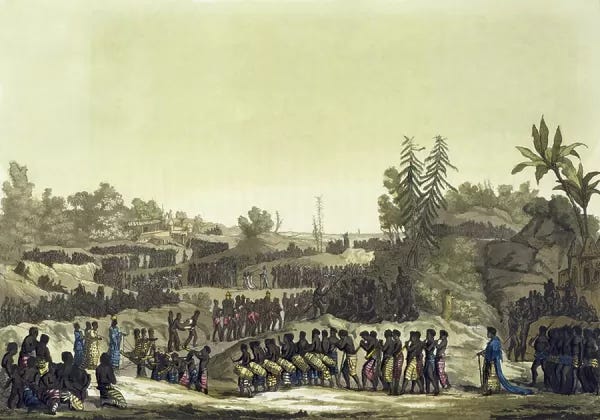
The **[rainbow-serpent deities of West Africa](https://www.patreon.com/posts/dan-and-dangbe-121284939)** and the Atlantic world, which were first documented at Ouidah (Benin) in the 17th century but likely originated in the Middle Ages, were spread by local priests across multiple kingdoms and venerated in a variety of modest temples.
In the Meroitic kingdom of Kush, religious life included the worship of the deity Isis, for whom several temples were constructed across the Nile valley. These institutions were maintained by a dedicated priestly class that played a central role in disseminating the cult of the “Mother of God” **[throughout the Roman world](https://www.patreon.com/posts/118446319)**.
[](https://substackcdn.com/image/fetch/$s_!3a9D!,f_auto,q_auto:good,fl_progressive:steep/https%3A%2F%2Fsubstack-post-media.s3.amazonaws.com%2Fpublic%2Fimages%2Fc4539da5-e230-4958-9f10-69d627446d8b_600x420.png)
_**'Festa in onore del dio serpente' (Festival in honor of the God Snake)**_, Ouidah. 19th-century engraving by Giovanni Antonio
[](https://substackcdn.com/image/fetch/$s_!R8JL!,f_auto,q_auto:good,fl_progressive:steep/https%3A%2F%2Fsubstack-post-media.s3.amazonaws.com%2Fpublic%2Fimages%2F8b722fb5-ac63-4832-8135-5972e0a5afbe_568x503.png)
_**Amulet showing seated Isis suckling her son Horus**_. Nubian, Napatan period, 25th Dynasty, 7th century BC. Findspot: Meroe, Sudan. _**Amulet of Isis nursing the infant Horus,**_ Nubian, Meroitic Period. Findspot: Sudan, Meroe. Boston Museum.
Similarly, the adoption of Islam across broad swathes of the continent is attributed to the expansion of commercial diasporas, such as [the Jabarti](https://www.patreon.com/posts/intellectual-and-97830282) in the Horn of Africa, [The Swahili](https://www.africanhistoryextra.com/p/the-intellectual-history-of-east) of the East African coast, and [the Wangara](https://www.africanhistoryextra.com/p/foundations-of-trade-and-education) of West Africa.
Christianity also flourished in this diverse religious milieu from classical antiquity through the early modern period. While earlier scholarship on classical Christianity emphasized the conversion of ‘pagan’ monarchs, more recent studies have shown that the spread of the religion was not the result of singular, transformative events but rather occurred through the gradual process of inculturation.
Inculturation refers to the adoption of Christian teachings and practices in a particular cultural context. The concept has been widely applied in studies of Christianization, not only in the Roman world but also in other ancient societies, including the kingdoms of Aksum and Nubia.
The conventional narrative of the Christianization of Aksum centers on the conversion of King Ezana in 340 CE, traditionally attributed to two Syrian captives at his court who had arrived during the reign of his predecessor, Ousanas.
However, the historian David Phillipson has argued that the adoption of Christianity in Aksum was a gradual process, “presented to the king and his diverse subjects with skill and selectivity.” Documentary evidence attests to the presence of Christians in the capital before Ezana’s conversion, while the king’s own inscriptions, initially framed in polytheistic language, suggest a cautious and incremental embrace of the new faith.[1](https://www.africanhistoryextra.com/p/a-brief-history-of-christianity-in#footnote-1-182221546)
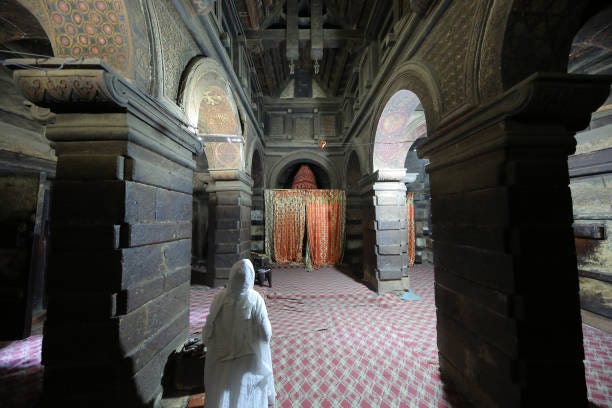
Christianity was subsequently adopted by broader segments of the population and developed a distinctly Aksumite character, which was preserved and further elaborated from the Middle Ages through the modern period by the Tewahedo Church of Ethiopia and Eritrea.
[](https://substackcdn.com/image/fetch/$s_!1HU4!,f_auto,q_auto:good,fl_progressive:steep/https%3A%2F%2Fsubstack-post-media.s3.amazonaws.com%2Fpublic%2Fimages%2F78b211ad-fcdd-4e73-af76-c4bd2f5ca66a_1366x456.png)
_**The Garima Gospels**_, ca 330–650 and 530–660 CE. Tigray, Ethiopia. digitized by [the Hill Museum & Manuscript Library](https://www.vhmml.org/readingRoom/view/132897).
[](https://substackcdn.com/image/fetch/$s_!ckR8!,f_auto,q_auto:good,fl_progressive:steep/https%3A%2F%2Fsubstack-post-media.s3.amazonaws.com%2Fpublic%2Fimages%2Fb1a1400d-f1a4-4963-87fa-244328f81ad7_612x408.png)
_**The church of Yemrehanna Krestos, Ahmara, Ethiopia.**_
Similar to Aksum, conventional church histories attribute the foundation of Nubian Christianity to Byzantine ecclesiastical initiatives, specifically the dispatch of Melkite and Monophysite missionaries to Nubia (Sudan) by Emperor Justinian and Empress Theodora in the 6th century CE.
However, archaeological and documentary evidence suggest that Christianity was present in Nubia more than a century earlier. Rulers were interred with Christian objects, and at least one prince bore a Christian name, Mouses. According to Salim Faraji, the reign of the [Noubadian](https://www.africanhistoryextra.com/p/an-african-kingdom-on-the-edge-of?utm_source=publication-search) king Silko, whose victory inscription declares that “God gave me the victory,” laid the political and cultural foundations for the broader Christianization of Nubia.[2](https://www.africanhistoryextra.com/p/a-brief-history-of-christianity-in#footnote-2-182221546)
For most of the Middle Ages, from the 6th to the 14th century, Christianity flourished in the three Nubian kingdoms of Nobadia, [Makuria](https://www.africanhistoryextra.com/p/christian-nubia-muslim-egypt-and), and Alodia, where it developed a distinctly Nubian character. Cathedrals and monasteries adorned with elaborate paintings were constructed at Dongola, Soba, and Faras, and Nubian Christian communities persisted as late as the 16th century, long after the political collapse of the three kingdoms.
[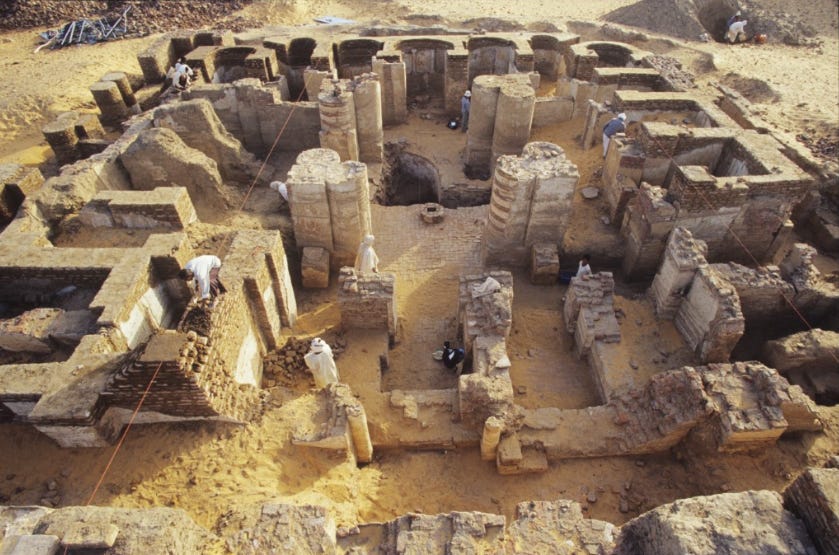](https://substackcdn.com/image/fetch/$s_!hFz5!,f_auto,q_auto:good,fl_progressive:steep/https%3A%2F%2Fsubstack-post-media.s3.amazonaws.com%2Fpublic%2Fimages%2F092b17a2-5a86-4d7e-94a4-cc21acbb1e50_839x555.png)
[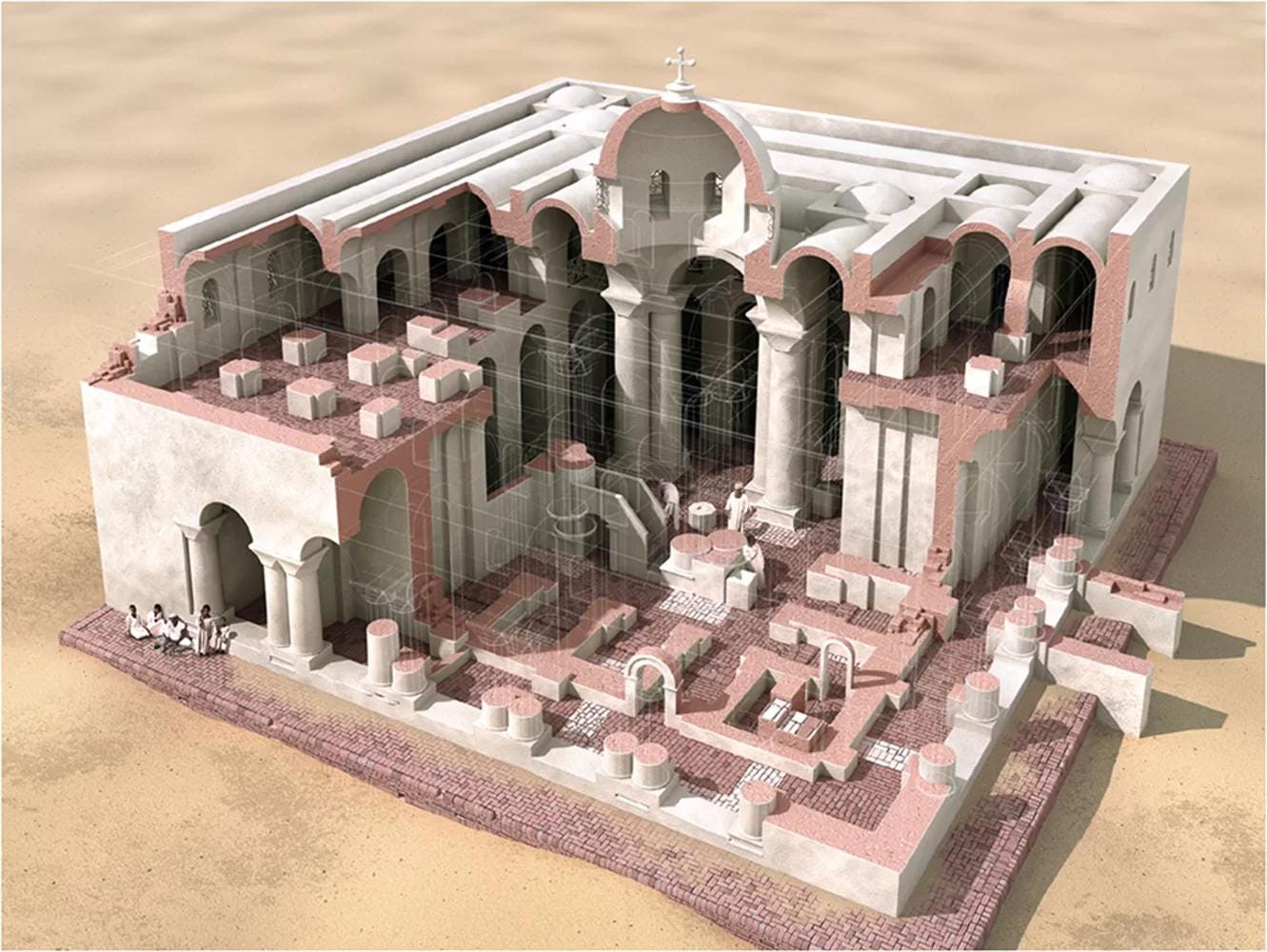](https://substackcdn.com/image/fetch/$s_!BJ4S!,f_auto,q_auto:good,fl_progressive:steep/https%3A%2F%2Fsubstack-post-media.s3.amazonaws.com%2Fpublic%2Fimages%2Faf6cd548-aa84-4def-b7bd-fa14cd72ba20_1331x1000.jpeg)
_**The medieval church of Bangnarti, Sudan.**_ image by B. Żurawski
In the southern half of the continent, historical research on early Christian communities has largely focused on [the Kingdom of Kongo](https://www.africanhistoryextra.com/p/the-kingdom-of-kongo-and-the-portuguese), where Christianity endured for nearly five centuries. This contrasts with other societies, such as those along the [Swahili coast](https://www.africanhistoryextra.com/p/the-portuguese-and-the-swahili-from?utm_source=publication-search) (Kenya, Tanzania), [Mutapa (Zimbabwe)](https://www.africanhistoryextra.com/p/the-kingdom-of-mutapa-and-the-portuguese), and [Ndongo](https://www.africanhistoryextra.com/p/the-kingdom-of-ndongo-and-the-portuguese?utm_source=publication-search) (Angola), where the religion largely disappeared shortly after its introduction in the 16th century.
While earlier scholarship emphasized the practical and political motivations behind the rulers’ adoption of Christianity in Kongo, more recent studies have shown that its adoption as a popular religion was shaped by an ideological and iconographic synthesis between the pre-Christian belief systems of Kongo and 16th-century Catholic practices and traditions.
Once established, the Kongolese Church survived through the efforts of its rulers, laypeople, and ordinary subjects, who took the lead in shaping the religion according to their cultural context. According to Cécile Fromont, Kongo’s artwork _**“naturalized Christianity into a local discourse about the nature of the of the supernatural and the cycle of life and death and, in turn, transposed Kongo religious signs into visual expressions of Catholic thought.”**_[3](https://www.africanhistoryextra.com/p/a-brief-history-of-christianity-in#footnote-3-182221546)
[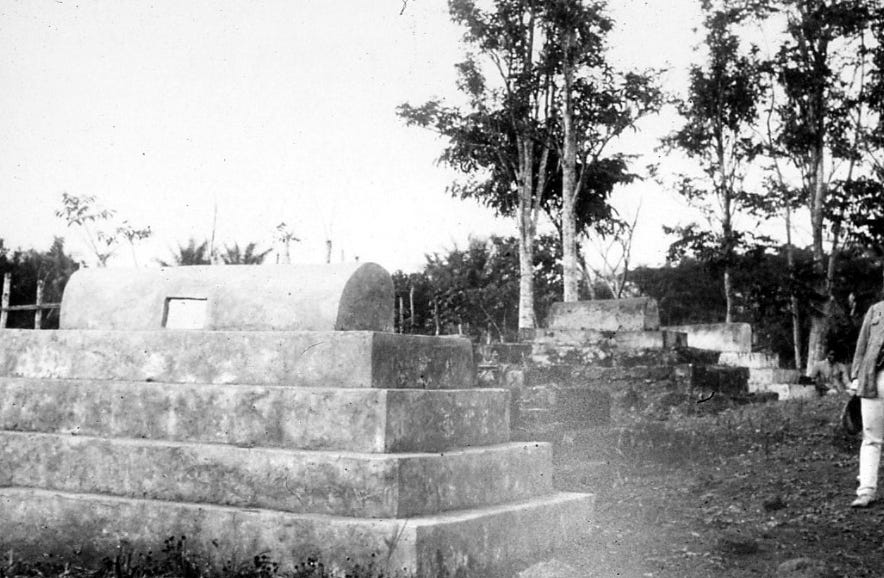](https://substackcdn.com/image/fetch/$s_!vkzn!,f_auto,q_auto:good,fl_progressive:steep/https%3A%2F%2Fsubstack-post-media.s3.amazonaws.com%2Fpublic%2Fimages%2F648a1cfa-8b44-4cf9-81f8-d5ad63439db1_884x578.png)
_**Tombs of the Christian kings of Kongo.**_ Mbanza kongo, Angola.
[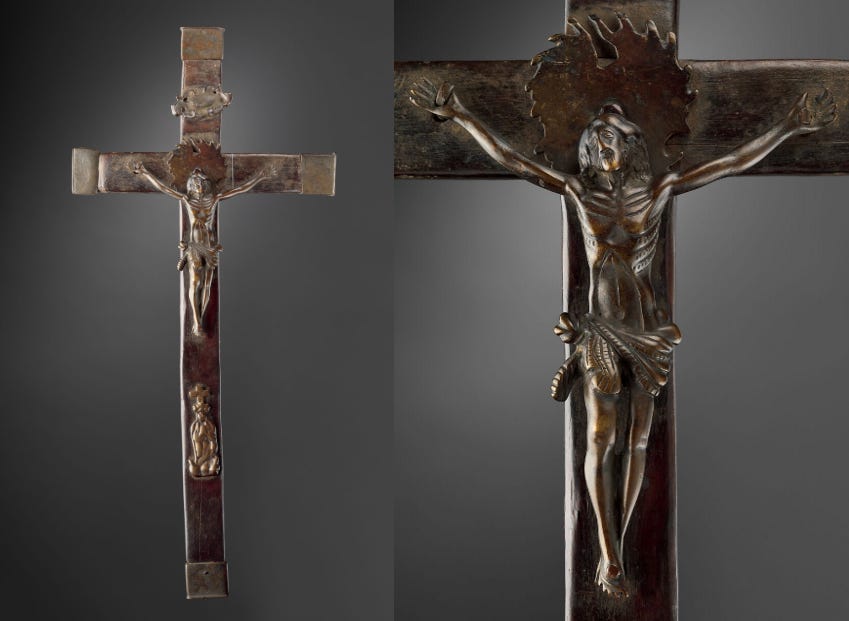](https://substackcdn.com/image/fetch/$s_!ttnQ!,f_auto,q_auto:good,fl_progressive:steep/https%3A%2F%2Fsubstack-post-media.s3.amazonaws.com%2Fpublic%2Fimages%2F3913f4e5-aa9d-48eb-8de8-36c39b2140bb_849x621.png)
_**Crucifix.**_ Kongo Kingdom 16th–17th century. Met Museum
The complexity of the adoption of Christianity in pre-colonial Africa is best illustrated by its early spread among the West African societies of the Upper Guinea (Senegal to Sierra Leone) and the Bight of Benin during the 16th century.
In these regions, local rulers and their subjects actively shaped a distinctly African form of Christianity. While they engaged with visiting priests and sent embassies to the Iberian kingdoms, the church was ultimately established and administered according to indigenous authority, reflecting a deliberate adaptation of Christian practices to local cultural, political, and social contexts.
These West African Christians harmonized existing beliefs and practices common to both West African and Catholic traditions, ensuring that the real institution of the church, both theologically and organizationally, remained under African control.
Once established, internal dynamics unique to each society determined whether the church was abandoned or continued to flourish. In some cases, these Christian polities endured for nearly four centuries after the religion’s initial introduction.
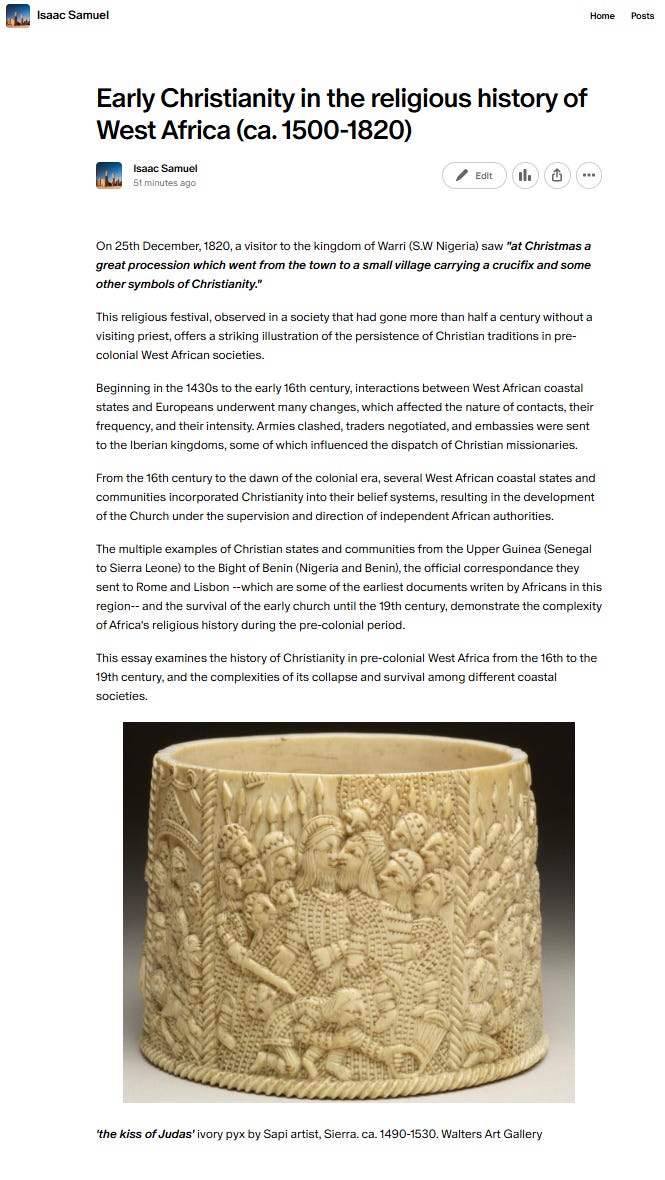
On 25th December, 1820, a visitor to the kingdom of Warri (S.W Nigeria) saw _**“at Christmas a great procession which went from the town to a small village carrying a crucifix and some other symbols of Christianity.”**_
This religious festival, observed in a society that had gone more than half a century without a visiting priest, offers a striking illustration of the persistence of Christian traditions in pre-colonial West African societies.
The history of Christianity in pre-colonial West Africa is the subject of my latest Patreon Article. Please subscribe to read about it here:
[EARLY CHRISTIANITY IN WEST AFRICA](https://www.patreon.com/posts/146362801)
[](https://substackcdn.com/image/fetch/$s_!HdQJ!,f_auto,q_auto:good,fl_progressive:steep/https%3A%2F%2Fsubstack-post-media.s3.amazonaws.com%2Fpublic%2Fimages%2F07ac684e-e46a-4f38-8d6c-5e05760f948d_665x1180.png)
Thanks for reading African History Extra! Subscribe for free to receive new posts and support my work.
Subscribe
[1](https://www.africanhistoryextra.com/p/a-brief-history-of-christianity-in#footnote-anchor-1-182221546)
Foundations of an African Civilisation: Aksum and the Northern Horn, 1000 BC - AD 1300 By D. W. Phillipson. Church and State in Ethiopa 1270-1527 By Tamrat Tadesse
[2](https://www.africanhistoryextra.com/p/a-brief-history-of-christianity-in#footnote-anchor-2-182221546)
The Roots of Nubian Christianity Uncovered [and] the Triumph of the Last Pharaoh Religious Encounters in Late Antique Africa By Salim Faraji
[3](https://www.africanhistoryextra.com/p/a-brief-history-of-christianity-in#footnote-anchor-3-182221546)
The Art of Conversion Christian Visual Culture in the Kingdom of Kongo By Cécile Fromont
[](https://substack.com/profile/134503573-kachi)[](https://substack.com/profile/1133787-patrick-reilly)[](https://substack.com/profile/29353584-samoan62)[](https://substack.com/profile/103915083-dr-d-elisabeth-glassco)[](https://substack.com/profile/379754438-annette)
[62 Likes](https://www.africanhistoryextra.com/p/a-brief-history-of-christianity-in)∙
[9 Restacks](https://substack.com/note/p-182221546/restacks?utm_source=substack&utm_content=facepile-restacks)
62
4
9
Share
#### Discussion about this post
Comments Restacks

[](https://substack.com/profile/312088397-jim-kalbee?utm_source=comment)
[Jim Kalbee](https://substack.com/profile/312088397-jim-kalbee?utm_source=substack-feed-item)
[Dec 21](https://www.africanhistoryextra.com/p/a-brief-history-of-christianity-in/comment/190312848 "Dec 21, 2025, 7:36 PM")
Liked by isaac Samuel
Isaac Samuel is among the senior faculty at our homeschool. Only 2 students - one is 13, the other almost 80. Lifelong learning in action, pre-colonial West Africa a current multi-year focus. Thank you, Isaac Samuel.
Expand full comment
[Like (3)](javascript:void(0))[Reply](https://www.africanhistoryextra.com/p/a-brief-history-of-christianity-in)[Share](https://www.africanhistoryextra.com/p/a-brief-history-of-christianity-in)
[2 replies by isaac Samuel and others](https://www.africanhistoryextra.com/p/a-brief-history-of-christianity-in/comment/190312848)
[](https://substack.com/profile/325376762-rekhet-filosofia-africana?utm_source=comment)
[Rekhet | Filosofia Africana](https://substack.com/profile/325376762-rekhet-filosofia-africana?utm_source=substack-feed-item)
[8d](https://www.africanhistoryextra.com/p/a-brief-history-of-christianity-in/comment/191332394 "Dec 24, 2025, 5:19 PM")
It's interesting to observe that the Christianity in Nubia has flourished by the same political motivation that Mohammed has started a monotheistic religion in Arabic Peninsula and then founded the Islan Religion and, on the other side of Red Sea, Abyssinian Empire has converted to Christianity too: the convention of Roman Empire in Christianity has show that this new spiritual paradigm has arrived and empowered the civilizations. The tragic of all this millennial history is that Ethiopia has became a powerful empire, but Nubians has declined and submitted to a vassall relationship with Meca. The Tragedy of Kongo is just a revival of this assimetric relationship between the colonizer's and the colonizer's cristianities. Thanks for the instigator text
Expand full comment
[Like](javascript:void(0))[Reply](https://www.africanhistoryextra.com/p/a-brief-history-of-christianity-in)[Share](https://www.africanhistoryextra.com/p/a-brief-history-of-christianity-in)
[2 more comments...](https://www.africanhistoryextra.com/p/a-brief-history-of-christianity-in/comments)
Top Latest Discussions
[Acemoglu in Kongo: a critique of 'Why Nations Fail' and its wilful ignorance of African history.](https://www.africanhistoryextra.com/p/acemoglu-in-kongo-a-critique-of-why)
[There aren’t many Africans on the list of Nobel laureates, nor does research on African societies show up in the selection committees of Stockholm.](https://www.africanhistoryextra.com/p/acemoglu-in-kongo-a-critique-of-why)
Nov 3, 2024•[isaac Samuel](https://substack.com/@isaacsamuel)
111
26
26

[The city states of the Yoruba: a history of pre-colonial West African urbanism (1000-1900 CE)](https://www.africanhistoryextra.com/p/the-city-states-of-the-yoruba-a-history)
[At the close of the 19th century, the Yorùbá region of South-west Nigeria was one of the most urbanized places in Africa.](https://www.africanhistoryextra.com/p/the-city-states-of-the-yoruba-a-history)
Sep 7, 2025•[isaac Samuel](https://substack.com/@isaacsamuel)
59
6
8

[Africans in the Indian Ocean world and the autobiography of a Somali Globetrotter.](https://www.africanhistoryextra.com/p/africans-in-the-indian-ocean-world)
[In 1944, a soldier on Australia’s most remote northern coastline discovered a handful of copper coins that were originally minted in the medieval…](https://www.africanhistoryextra.com/p/africans-in-the-indian-ocean-world)
Aug 17, 2025•[isaac Samuel](https://substack.com/@isaacsamuel)
66
4
11

See all
### Ready for more?
Subscribe
© 2026 isaac Samuel · [Privacy](https://substack.com/privacy) ∙ [Terms](https://substack.com/tos) ∙ [Collection notice](https://substack.com/ccpa#personal-data-collected)
[Start your Substack](https://substack.com/signup?utm_source=substack&utm_medium=web&utm_content=footer)[Get the app](https://substack.com/app/app-store-redirect?utm_campaign=app-marketing&utm_content=web-footer-button)
[Substack](https://substack.com/) is the home for great culture
|
https://www.africanhistoryextra.com/p/a-brief-history-of-gold-in-africa
|
Published Time: 2024-09-01T16:25:54+00:00
A brief history of Gold in Africa and the emporium of Sofala.
===============
[](https://www.africanhistoryextra.com/)
[African History Extra](https://www.africanhistoryextra.com/)
=============================================================
Subscribe Sign in

Discover more from African History Extra
All about African history; narrating the continent's neglected past
Over 15,000 subscribers
Subscribe
By subscribing, I agree to Substack's [Terms of Use](https://substack.com/tos), and acknowledge its [Information Collection Notice](https://substack.com/ccpa#personal-data-collected) and [Privacy Policy](https://substack.com/privacy).
Already have an account? [Sign in](https://www.africanhistoryextra.com/p/a-brief-history-of-gold-in-africa)
A brief history of Gold in Africa and the emporium of Sofala.
=============================================================
[](https://substack.com/@isaacsamuel)
[isaac Samuel](https://substack.com/@isaacsamuel)
Sep 01, 2024
33
1
3
Share
It was copper, not Gold, that was considered the most important metal in most African societies, according to an authoritative study by Eugenia Herbert. Employing archaeological evidence as well as historical documentation, Herbert concluded that copper had more intrinsic value than Gold and that the few exceptions reflected a borrowed system of values from the Muslim or Christian worlds.[1](https://www.africanhistoryextra.com/p/a-brief-history-of-gold-in-africa#footnote-1-148365888)
However, more recent historical investigations into the relative values of Gold and Copper across different African societies undermine this broad generalization. While there's plenty of evidence that Copper and its alloys were indeed the most valued metal in many African societies, there has also been increasing evidence for the importance of Gold in several societies across the continent that cannot solely be attributed to external influence.
In ancient Nubia where some of the continent's oldest gold mines are found, Gold objects appear extensively in the archaeological record of the kingdoms of Kerma and Kush. Remains of workshops of goldsmiths at the capital of classic Kerma and Meroe, ruins of architectural features and statues covered in gold leaf, inscriptions about social ceremonies involving the use of gold dust and objects, as well as finds of gold jewelry across multiple sites along the Middle Nile, provide evidence that ancient Nubia wasn't just an exporter of Gold, but also a major consumer of the precious metal.[2](https://www.africanhistoryextra.com/p/a-brief-history-of-gold-in-africa#footnote-2-148365888)
[](https://substackcdn.com/image/fetch/$s_!ond8!,f_auto,q_auto:good,fl_progressive:steep/https%3A%2F%2Fsubstack-post-media.s3.amazonaws.com%2Fpublic%2Fimages%2F5a98e751-c4a5-4204-8607-6b3c006c0258_1182x578.png)
_**Gold objects from ancient Nubia at the Boston Museum**_; Bronze dagger from Kerma with gilded hilt, 18th century. BC, Isis gold pectoral from Napata, 6th century BC, earrings and ear studs from Meroe, 1st century BC-3rd century CE.
In the Senegambia region of west Africa, where societies of [mobile herders constructed megaliths and tumuli graves dating back to the 2nd millennium BC](https://www.patreon.com/posts/unlocking-of-of-68055326), a trove of gold objects was included in the array of finery deposited to accompany their owners into the afterlife. The resplendent gold pectoral of Rao, dated to the 8th century CE is only the best known among the collection of gold objects from the Senegambia region that include gold chains and gold beads from the Wanar and Kael Tumulus, dated to the 6th century CE, which predate the Islamic period.[3](https://www.africanhistoryextra.com/p/a-brief-history-of-gold-in-africa#footnote-3-148365888)
Equally significant is the better-known region of the Gold Coast in modern Ghana, where many societies, especially among the Akan-speaking groups, were renowned for gold mining and smithing. The rulers of the earliest states which emerged around the 13th century at Bono-Manso and later at Denkyira and Asante in the 17th and 18th centuries, placed significant value on gold, which was extracted from deep ancient mines, worked into their royal regalia, stored in the form of gold dust, and sold to the [Wangara merchants from Mali](https://www.africanhistoryextra.com/p/foundations-of-trade-and-education).[4](https://www.africanhistoryextra.com/p/a-brief-history-of-gold-in-africa#footnote-4-148365888)
[](https://substackcdn.com/image/fetch/$s_!fFE_!,f_auto,q_auto:good,fl_progressive:steep/https%3A%2F%2Fsubstack-post-media.s3.amazonaws.com%2Fpublic%2Fimages%2F5c426345-3ade-4bdc-a402-e497062dd9f4_1100x536.png)
_**Rao pectoral**_, 8th century CE, Senegal, Institut Fondamental d’Afrique Noire Cheikh Anta Diop._**Pendant dish, Asante kingdom**_, 19th century, Ghana, British Museum.
While Africa's gold exports increased during the Islamic era and the early modern period, the significance of these external contacts to Africa's internal demand for gold was limited to regions where there was pre-existing local demand.
For example, despite the numerous accounts of the golden caravans from Medieval Mali such as the over 12 tonnes of gold carried by Mansa Musa in 1324, no significant collection of gold objects has been recovered from the region (compared to the many bronze objects found across Mali’s old cities and towns). A rare exception is the 19th-century treasure of Umar Tal that was **stolen**by the French from Segou, which included 75kg of gold and over 160 tons of silver.[5](https://www.africanhistoryextra.com/p/a-brief-history-of-gold-in-africa#footnote-5-148365888)
Compare this to the Gold Coast which exported about 1 tonne of gold annually[6](https://www.africanhistoryextra.com/p/a-brief-history-of-gold-in-africa#footnote-6-148365888), and where hundreds of gold objects were **stolen** by the British from the Asante capital Kumasi, during the campaigns of 1826, 1874, and 1896[7](https://www.africanhistoryextra.com/p/a-brief-history-of-gold-in-africa#footnote-7-148365888), with at least 239 items housed at the British Museum, not counting the dozens of other institutions and the rest of the objects which were either melted or surrendered as part of the indemnity worth 1.4 tonnes of gold. Just one of these objects, eg the gold head at London’s Wallace collection, weighs 1.36 kg.
[](https://substackcdn.com/image/fetch/$s_!KcQg!,f_auto,q_auto:good,fl_progressive:steep/https%3A%2F%2Fsubstack-post-media.s3.amazonaws.com%2Fpublic%2Fimages%2F2eb84e45-9e72-4155-a275-98c36c025768_964x411.png)
_**‘Trophy head’ from Asante, Ghana. 18th-19th century**_, Wallace Collection.
[](https://substackcdn.com/image/fetch/$s_!Op0q!,f_auto,q_auto:good,fl_progressive:steep/https%3A%2F%2Fsubstack-post-media.s3.amazonaws.com%2Fpublic%2Fimages%2Fe4350574-daa6-4d74-bf64-f017bf0b5a66_1234x539.png)
_**Gold jewelry, Wolof artist, late 19th-early 20th century**_, Senegal & Mauritania. Houston Museum of Fine Arts, Smithsonian Museum.
Domestic demand for gold in Africa was thus largely influenced by local value systems, with external trade being grafted onto older networks and patterns of exchange. Examples of these patterns of internal gold trade and consumption abound from Medieval Nubia to the Fulbe and Wolof kingdoms of the Senegambia, to the northern Horn of Africa.
This interplay between internal and external demand for gold is well attested in the region of south-east Africa where pre-existing demand for gold —evidenced by the various collections of gold objects from the many stone ruins scattered across the region— received further impetus from the Swahili city-states of the East African coast through the port town of Sofala in modern Mozambique.
At its height in the 15th century, an estimated 8.5 tonnes of gold went through Sofala each year, making it one of the world's biggest gold exporters of the precious metal.
**The history of the Gold trade of Sofala and the internal dynamics of gold demand within Southeast Africa and the Swahili coast is the subject of my latest Patreon article,**
**Please subscribe to read about it here:**
[THE GOLD TRADE OF SOFALA](https://www.patreon.com/posts/dynamics-of-gold-111163742?utm_medium=clipboard_copy&utm_source=copyLink&utm_campaign=postshare_creator&utm_content=join_link)
[](https://substackcdn.com/image/fetch/$s_!SaNC!,f_auto,q_auto:good,fl_progressive:steep/https%3A%2F%2Fsubstack-post-media.s3.amazonaws.com%2Fpublic%2Fimages%2Ff6a52d61-fe50-4be0-a461-be4f733af8ce_675x1090.png)
* * *
[](https://substackcdn.com/image/fetch/$s_!qqKZ!,f_auto,q_auto:good,fl_progressive:steep/https%3A%2F%2Fsubstack-post-media.s3.amazonaws.com%2Fpublic%2Fimages%2F32dfd7c9-0de4-40ea-9db2-bb4f88b1698f_811x583.png)
_**Pair of wooden sandals, covered with an ornamented silver sheet with borders made of attached silver drops, and a golden knob for support**_. Swahili artist, 19th century, Tanzania. SMB museum.
Thanks for reading African History Extra! Subscribe for free to receive new posts and support my work.
Subscribe
[1](https://www.africanhistoryextra.com/p/a-brief-history-of-gold-in-africa#footnote-anchor-1-148365888)
Red Gold of Africa: Copper in Precolonial History and Culture by Eugenia W. Herbert
[2](https://www.africanhistoryextra.com/p/a-brief-history-of-gold-in-africa#footnote-anchor-2-148365888)
Black Kingdom of the Nile by Charles Bonnet pg 29, 49, 62, 65, 169-173, The Image of the Ordered World in Ancient Nubian Art By László Török pg 82,85, 315, 472-473, The Kingdom of Kush: Handbook of the Napatan-Meroitic Civilization By László Török pg 112-121, 457, 460, 528)
[3](https://www.africanhistoryextra.com/p/a-brief-history-of-gold-in-africa#footnote-anchor-3-148365888)
Sahel: Art and Empires on the Shores of the Sahara By Alisa LaGamma pg 51-54, Caravans of Gold, Fragments in Time: Art, Culture, and Exchange Across Medieval Saharan Africa by Kathleen Bickford Berzock pg 181.
[4](https://www.africanhistoryextra.com/p/a-brief-history-of-gold-in-africa#footnote-anchor-4-148365888)
The State of the Akan and the Akan States by I. Wilks pg 240-246, The Archaeology of Islam in Sub-Saharan Africa By Timothy Insoll pg 340-342,
[5](https://www.africanhistoryextra.com/p/a-brief-history-of-gold-in-africa#footnote-anchor-5-148365888)
_**emphasis on ‘stolen’ here is to highlight how colonial warfare and looting may be responsible for the lack of significant archeological finds of gold objects from this region, considering how the majority of gold would have been kept in treasuries rather than buried. Excavations in Ghana for example have yet to recover any significant gold objects, despite the well-known collections of such objects in many Western institutions.**_ Caravans of Gold, Fragments in Time: Art, Culture, and Exchange Across Medieval Saharan Africa by Kathleen Bickford Berzock pg 179-180.
[6](https://www.africanhistoryextra.com/p/a-brief-history-of-gold-in-africa#footnote-anchor-6-148365888)
From Slave Trade to 'Legitimate' Commerce: The Commercial Transition in Nineteenth-Century West Africa by Robin Law pg 97
[7](https://www.africanhistoryextra.com/p/a-brief-history-of-gold-in-africa#footnote-anchor-7-148365888)
_the 1826 loot included £2m worth of gold and a nugget weighing 20,000 ounces, the 1874 loot included dozens of gold objects including several masks, with one weighing 41 ounces, part of the 1874 indemnity of 50,000 ounces was paid in gold objects shortly after, and again in 1896._ see; The Fall of the Asante Empire by Robert B. Edgerton, Asante in the Nineteenth Century By Ivor Wilks
* * *
#### Subscribe to African History Extra
By isaac Samuel · Launched 4 years ago
All about African history; narrating the continent's neglected past
Subscribe
By subscribing, I agree to Substack's [Terms of Use](https://substack.com/tos), and acknowledge its [Information Collection Notice](https://substack.com/ccpa#personal-data-collected) and [Privacy Policy](https://substack.com/privacy).
[](https://substack.com/profile/255628153-the-africa-review)[](https://substack.com/profile/110412978-aj)[](https://substack.com/profile/98635331-alton-mark-allen)[](https://substack.com/profile/29353584-samoan62)[](https://substack.com/profile/10684878-david-perlmutter)
[33 Likes](https://www.africanhistoryextra.com/p/a-brief-history-of-gold-in-africa)∙
[3 Restacks](https://substack.com/note/p-148365888/restacks?utm_source=substack&utm_content=facepile-restacks)
33
1
3
Share
#### Discussion about this post
Comments Restacks

[1 more comment...](https://www.africanhistoryextra.com/p/a-brief-history-of-gold-in-africa/comments)
Top Latest Discussions
[Acemoglu in Kongo: a critique of 'Why Nations Fail' and its wilful ignorance of African history.](https://www.africanhistoryextra.com/p/acemoglu-in-kongo-a-critique-of-why)
[There aren’t many Africans on the list of Nobel laureates, nor does research on African societies show up in the selection committees of Stockholm.](https://www.africanhistoryextra.com/p/acemoglu-in-kongo-a-critique-of-why)
Nov 3, 2024•[isaac Samuel](https://substack.com/@isaacsamuel)
111
26
26

[The city states of the Yoruba: a history of pre-colonial West African urbanism (1000-1900 CE)](https://www.africanhistoryextra.com/p/the-city-states-of-the-yoruba-a-history)
[At the close of the 19th century, the Yorùbá region of South-west Nigeria was one of the most urbanized places in Africa.](https://www.africanhistoryextra.com/p/the-city-states-of-the-yoruba-a-history)
Sep 7, 2025•[isaac Samuel](https://substack.com/@isaacsamuel)
59
6
8

[Africans in the Indian Ocean world and the autobiography of a Somali Globetrotter.](https://www.africanhistoryextra.com/p/africans-in-the-indian-ocean-world)
[In 1944, a soldier on Australia’s most remote northern coastline discovered a handful of copper coins that were originally minted in the medieval…](https://www.africanhistoryextra.com/p/africans-in-the-indian-ocean-world)
Aug 17, 2025•[isaac Samuel](https://substack.com/@isaacsamuel)
66
4
11

See all
### Ready for more?
Subscribe
© 2026 isaac Samuel · [Privacy](https://substack.com/privacy) ∙ [Terms](https://substack.com/tos) ∙ [Collection notice](https://substack.com/ccpa#personal-data-collected)
[Start your Substack](https://substack.com/signup?utm_source=substack&utm_medium=web&utm_content=footer)[Get the app](https://substack.com/app/app-store-redirect?utm_campaign=app-marketing&utm_content=web-footer-button)
[Substack](https://substack.com/) is the home for great culture
|
https://www.africanhistoryextra.com/p/a-brief-note-on-africa-in-16th-century
|
Published Time: 2024-03-03T16:30:13+00:00
a brief note on Africa in 16th century global history.
===============
[](https://www.africanhistoryextra.com/)
[African History Extra](https://www.africanhistoryextra.com/)
=============================================================
Subscribe Sign in

Discover more from African History Extra
All about African history; narrating the continent's neglected past
Over 15,000 subscribers
Subscribe
By subscribing, I agree to Substack's [Terms of Use](https://substack.com/tos), and acknowledge its [Information Collection Notice](https://substack.com/ccpa#personal-data-collected) and [Privacy Policy](https://substack.com/privacy).
Already have an account? [Sign in](https://www.africanhistoryextra.com/p/a-brief-note-on-africa-in-16th-century)
a brief note on Africa in 16th century global history.
======================================================
### the international relations and manuscripts of Kongo
[](https://substack.com/@isaacsamuel)
[isaac Samuel](https://substack.com/@isaacsamuel)
Mar 03, 2024
23
2
3
Share
The 16th century was one the most profound periods of change in Africa's international relations.
Africans had led the initiative in establishing international contact across Eurasia[1](https://www.africanhistoryextra.com/p/a-brief-note-on-africa-in-16th-century#footnote-1-142265250), and the expansion of the Ottoman and Portuguese empires in the 16th century further accelerated Africa's engagement with the rest of the world, reshaping pre-existing patterns of regional alliances and rivalries.
In the northern Horn of Africa, the armies of the Adal sultanate defeated the Ethiopian forces in 1529 as their leader, Imam Ahmad al-Ghazi, launched a series of successful campaigns that briefly subsumed most of Ethiopia. Al-Ghazi's campaigns eventually acquired an international dimension and became increasingly enmeshed in the global conflict between the Portuguese and the Ottomans. The Turks supplied al-Ghazi with firearms and soldiers, while the Portuguese provided the same to the Ethiopian ruler Gelawdewos, who eventually won the war in 1543.
[](https://substackcdn.com/image/fetch/$s_!9_IF!,f_auto,q_auto:good,fl_progressive:steep/https%3A%2F%2Fsubstack-post-media.s3.amazonaws.com%2Fpublic%2Fimages%2Fcf939165-cea3-488a-adb1-0d27b64ed7ae_820x599.png)
**‘Futuh al-Habasa’** (_Conquest of Abyssinia_) written by Sihab ad-Din Ahmad bin Abd al-Qader in 1559, copy at the King Saud University.[2](https://www.africanhistoryextra.com/p/a-brief-note-on-africa-in-16th-century#footnote-2-142265250)
Around the same time, the rulers of the Swahili city-states along the East African coast who were opposed to the Portuguese presence sent envoys to the Ottoman provinces in Arabia beginning in 1542, looking for allies to aid them in expelling the Portuguese. After several more embassies in the 1550s and 60s, Ottoman corsair Ali Beg brought his forces to the East African coast in 1585 and 1589, but was eventually forced to withdraw after an army from the mainland drove his forces from the coast.[3](https://www.africanhistoryextra.com/p/a-brief-note-on-africa-in-16th-century#footnote-3-142265250)
On the other side of the continent the simultaneous expansion of the Portuguese and Ottomans into north-western Africa threatened the regional balance of power between the empires of Morocco and Bornu. After a series of diplomatic initiatives by Bornu’s envoys to Marrakech and Istanbul, the Moroccans defeated the Portuguese in 1578, just as Bornu's ruler Mai Idris Alooma was halting the Ottoman advance into Bornu’s dependancies in southern Libya.[4](https://www.africanhistoryextra.com/p/a-brief-note-on-africa-in-16th-century#footnote-4-142265250)
[](https://substackcdn.com/image/fetch/$s_!nsuc!,f_auto,q_auto:good,fl_progressive:steep/https%3A%2F%2Fsubstack-post-media.s3.amazonaws.com%2Fpublic%2Fimages%2Fe40c72d1-dcff-44cf-a7ef-eee34186e979_820x615.jpeg)
_**the 16th century fortress of Murzuq in southern Libya’s Fezzan region, associated with the Awlad dynasty, a client state of Bornu**_. The fezzan remained the border between Bornu and the Ottomans and it was from this region that **[Bornu acquired european slave soldiers and firearms from the Ottomans](https://www.patreon.com/posts/first-guns-and-84319870)**.
In all three regions, the globalized rivalries between the regional powers are mentioned in some of Africa's best known works of historical literature. The chronicle on Adal’s ‘_Conquest of Abyssinia’_ was completed in 1559, in the same decade that the chronicle of the Swahili city of Kilwa was written, and not long before the Bornu scholar Aḥmad Furṭū would complete the first chronicle of Mai Idris' reign in 1576. While all three chronicles are primarily concerned with domestic politics, they also include an international dimension regarding the diplomatic activities of their kingdoms.[5](https://www.africanhistoryextra.com/p/a-brief-note-on-africa-in-16th-century#footnote-5-142265250)
Much further south in the region of west-central Africa, another African society entered the international arena, without engaging in the global rivaries of the period. The sudden entry of the kingdom of Kongo into global politics and the emergence of its intellectual tradition was one of the most significant yet often misunderstood developments in 16th-century Africa.
**The international activities of the kingdom of Kongo and its intellectual traditions are the subject of my latest Patreon article.**
**please subscribe to read about it here:**
[KONGO'S FOREIGN RELATIONS & MANUSCRIPTS](https://www.patreon.com/posts/99646036)
[](https://substackcdn.com/image/fetch/$s_!ri8t!,f_auto,q_auto:good,fl_progressive:steep/https%3A%2F%2Fsubstack-post-media.s3.amazonaws.com%2Fpublic%2Fimages%2F7935d194-6756-43b8-8e1e-532551f30444_648x1186.png)
* * *
[](https://substackcdn.com/image/fetch/$s_!JG-n!,f_auto,q_auto:good,fl_progressive:steep/https%3A%2F%2Fsubstack-post-media.s3.amazonaws.com%2Fpublic%2Fimages%2F437706fb-81d4-4c72-bfd6-bae06e7bbcf8_688x604.png)
_**The ambassador Antonio Emanuele Ne Vunda of the Kingdom of Kongo and the embassy of Hasekura Tsunenaga of Japan**_. Painting by Agostino Taschi. ca. 1616 in the Sala dei Corazzieri, Palazzo del Quirinale., Rome
* * *
Thanks for reading African History Extra! Subscribe for free to receive new posts and support my work.
Subscribe
[1](https://www.africanhistoryextra.com/p/a-brief-note-on-africa-in-16th-century#footnote-anchor-1-142265250)
**[Did Europeans Discover Africa? Or Was It the Other Way Around?](https://newlinesmag.com/essays/did-europeans-discover-africa-or-the-other-way-around/)**
[2](https://www.africanhistoryextra.com/p/a-brief-note-on-africa-in-16th-century#footnote-anchor-2-142265250)
[Link](https://makhtota.ksu.edu.sa/makhtota/2400/56)
[3](https://www.africanhistoryextra.com/p/a-brief-note-on-africa-in-16th-century#footnote-anchor-3-142265250)
[The Portuguese and the Swahili, from foes to unlikely partners: Afro-European interface in the early modern era ---------------------------------------------------------------------------------------------------------------](https://www.africanhistoryextra.com/p/the-portuguese-and-the-swahili-from)
[isaac Samuel](https://substack.com/profile/44604452-isaac-samuel)
·
March 13, 2022
[](https://www.africanhistoryextra.com/p/the-portuguese-and-the-swahili-from)
Studies of early Afro-European history are at times plagued by anachronistic theories used by some scholars, who begin their understanding of the era from the perspective of colonial Africa and project it backwards to the 16th and 17th centuries when first contacts were made; such as those between the Swahili and the Portuguese. They construct an image …
[Read full story](https://www.africanhistoryextra.com/p/the-portuguese-and-the-swahili-from)
[4](https://www.africanhistoryextra.com/p/a-brief-note-on-africa-in-16th-century#footnote-anchor-4-142265250)
[Morocco, Songhai, Bornu and the quest to create an African empire to rival the Ottomans. ----------------------------------------------------------------------------------------](https://www.africanhistoryextra.com/p/morocco-songhai-bornu-and-the-quest)
[isaac Samuel](https://substack.com/profile/44604452-isaac-samuel)
·
January 30, 2022
[](https://www.africanhistoryextra.com/p/morocco-songhai-bornu-and-the-quest)
The Sahara has for long been perceived as an impenetrable barrier separating “north africa” from “sub-saharan Africa”. The barren shifting sands of the 1,000-mile desert were thought to have constrained commerce between the two regions and restrained any political ambitions of states on either side to interact. This “desert barrier” theory was populariz…
[Read full story](https://www.africanhistoryextra.com/p/morocco-songhai-bornu-and-the-quest)
[5](https://www.africanhistoryextra.com/p/a-brief-note-on-africa-in-16th-century#footnote-anchor-5-142265250)
[An African-centered intellectual world; the scholarly traditions and literary production of the Bornu empire (11th-19th century) --------------------------------------------------------------------------------------------------------------------------------](https://www.africanhistoryextra.com/p/an-african-centered-intellectual)
[isaac Samuel](https://substack.com/profile/44604452-isaac-samuel)
·
September 11, 2022
[](https://www.africanhistoryextra.com/p/an-african-centered-intellectual)
Studies of African scholarship in general, and west African scholarship in particular, are often framed within diffusionist discourses, in which African intellectual traditions are "received” from outside and are positioned on the periphery of a greater system beyond the continent
[Read full story](https://www.africanhistoryextra.com/p/an-african-centered-intellectual)
[](https://substack.com/profile/159530813-emily)[](https://substack.com/profile/98635331-alton-mark-allen)[](https://substack.com/profile/29353584-samoan62)[](https://substack.com/profile/141844764-blossom-akpojisheri)[](https://substack.com/profile/10684878-david-perlmutter)
[23 Likes](https://www.africanhistoryextra.com/p/a-brief-note-on-africa-in-16th-century)∙
[3 Restacks](https://substack.com/note/p-142265250/restacks?utm_source=substack&utm_content=facepile-restacks)
23
2
3
Share
#### Discussion about this post
Comments Restacks

[](https://substack.com/profile/141844764-blossom-akpojisheri?utm_source=comment)
[Blossom Akpojisheri](https://substack.com/profile/141844764-blossom-akpojisheri?utm_source=substack-feed-item)
[Mar 3, 2024](https://www.africanhistoryextra.com/p/a-brief-note-on-africa-in-16th-century/comment/50837178 "Mar 3, 2024, 4:47 PM")
Is Gelawdewos the same as King Tewodros?
Expand full comment
[Like](javascript:void(0))[Reply](https://www.africanhistoryextra.com/p/a-brief-note-on-africa-in-16th-century)[Share](https://www.africanhistoryextra.com/p/a-brief-note-on-africa-in-16th-century)
[1 reply by isaac Samuel](https://www.africanhistoryextra.com/p/a-brief-note-on-africa-in-16th-century/comment/50837178)
[1 more comment...](https://www.africanhistoryextra.com/p/a-brief-note-on-africa-in-16th-century/comments)
Top Latest Discussions
[Acemoglu in Kongo: a critique of 'Why Nations Fail' and its wilful ignorance of African history.](https://www.africanhistoryextra.com/p/acemoglu-in-kongo-a-critique-of-why)
[There aren’t many Africans on the list of Nobel laureates, nor does research on African societies show up in the selection committees of Stockholm.](https://www.africanhistoryextra.com/p/acemoglu-in-kongo-a-critique-of-why)
Nov 3, 2024•[isaac Samuel](https://substack.com/@isaacsamuel)
111
26
26

[The city states of the Yoruba: a history of pre-colonial West African urbanism (1000-1900 CE)](https://www.africanhistoryextra.com/p/the-city-states-of-the-yoruba-a-history)
[At the close of the 19th century, the Yorùbá region of South-west Nigeria was one of the most urbanized places in Africa.](https://www.africanhistoryextra.com/p/the-city-states-of-the-yoruba-a-history)
Sep 7, 2025•[isaac Samuel](https://substack.com/@isaacsamuel)
59
6
8

[Africans in the Indian Ocean world and the autobiography of a Somali Globetrotter.](https://www.africanhistoryextra.com/p/africans-in-the-indian-ocean-world)
[In 1944, a soldier on Australia’s most remote northern coastline discovered a handful of copper coins that were originally minted in the medieval…](https://www.africanhistoryextra.com/p/africans-in-the-indian-ocean-world)
Aug 17, 2025•[isaac Samuel](https://substack.com/@isaacsamuel)
66
4
11

See all
### Ready for more?
Subscribe
© 2026 isaac Samuel · [Privacy](https://substack.com/privacy) ∙ [Terms](https://substack.com/tos) ∙ [Collection notice](https://substack.com/ccpa#personal-data-collected)
[Start your Substack](https://substack.com/signup?utm_source=substack&utm_medium=web&utm_content=footer)[Get the app](https://substack.com/app/app-store-redirect?utm_campaign=app-marketing&utm_content=web-footer-button)
[Substack](https://substack.com/) is the home for great culture
|
https://www.africanhistoryextra.com/p/a-brief-note-on-african-agency-in
|
Published Time: 2024-04-28T17:17:25+00:00
a brief note on African agency in its historical contacts with the rest of the world.
===============
[](https://www.africanhistoryextra.com/)
[African History Extra](https://www.africanhistoryextra.com/)
=============================================================
Subscribe Sign in

Discover more from African History Extra
All about African history; narrating the continent's neglected past
Over 15,000 subscribers
Subscribe
By subscribing, I agree to Substack's [Terms of Use](https://substack.com/tos), and acknowledge its [Information Collection Notice](https://substack.com/ccpa#personal-data-collected) and [Privacy Policy](https://substack.com/privacy).
Already have an account? [Sign in](https://www.africanhistoryextra.com/p/a-brief-note-on-african-agency-in)
a brief note on African agency in its historical contacts with the rest of the world.
=====================================================================================
### the indigenous and the foreign in Benin art
[](https://substack.com/@isaacsamuel)
[isaac Samuel](https://substack.com/@isaacsamuel)
Apr 28, 2024
30
2
Share
Contacts between people of different societies and cultures are one the most important subjects of research undertaken by historians and anthropologists.
But in African historiography, most studies of cultural contacts and discovery used to be concerned with the study of foreign perceptions of Africa and Africans, with relatively few studies being devoted to the African view of non-African people and societies, and how they evolved over time, especially during the era of mutual discovery beginning in the late 15th century.
[](https://substackcdn.com/image/fetch/$s_!U36i!,f_auto,q_auto:good,fl_progressive:steep/https%3A%2F%2Fsubstack-post-media.s3.amazonaws.com%2Fpublic%2Fimages%2F242acc5e-2f03-4034-881d-f1370176d302_1196x567.png)
_**Carved ivory salt cellars made by Sapi artists in early 16th century Sierra Leone, showing indigenous and foreign motifs.**_
This asymmetrical focus on the perspectives of non-Africans has created a false division between active and passive participants in cultural contacts, not just in research about the individual figures who participated in these exchanges, but also in the analysis of the "hybridized" objects, structures, and styles produced as a result of the contacts between African and non-Africans.
Fortunately, the recent shift to studying the perspectives of Africans in their cultural contacts with the rest of the world has revised previous ideas about Africa's role in the era of mutual discovery. As more research re-evaluates the impact of Africa's international relations on global history in general and African history in particular, a more coherent perspective on the initiative of Africans and their artistic creativity has emerged.
Recent publications such as David Northrup's '_**Africa's Discovery of Europe’**_ and Michał Tymowski's _**'Europeans and Africans'**_ have positioned Africans as fully articulated historical agents in the era of mutual discovery. While studies focused on the material impact of such interactions like Verena Krebs' _**‘Medieval Ethiopian Kingship’**_ and Manuel Joao Ramos' _**‘The Indigenous and the Foreign in Christian Ethiopian Art'**_ have reframed previous ideas about African agency in the creation of the 'hybridized' artwork and architecture of the period.
[](https://substackcdn.com/image/fetch/$s_!WqqS!,f_auto,q_auto:good,fl_progressive:steep/https%3A%2F%2Fbucketeer-e05bbc84-baa3-437e-9518-adb32be77984.s3.amazonaws.com%2Fpublic%2Fimages%2Ffd8f1cc4-be98-498f-a7ff-e662c65319c1_721x446.png)
_**18th century Ethiopian manuscript miniature depicting a long battlemented building similar to the Gondarine palace of Empress Mentewwab.**_ Mss Or. 791, British Library.
My articles about the African diaspora in [India](https://www.africanhistoryextra.com/p/the-african-diaspora-in-portuguese), [China](https://www.patreon.com/posts/80113224?pr=true), [Arabia](https://www.africanhistoryextra.com/p/a-history-of-the-west-african-diaspora), [Yemen and the Persian Gulf](https://www.patreon.com/posts/96900062), [Palestine](https://www.patreon.com/posts/80883718?pr=true), [ancient to modern Europe](https://newlinesmag.com/essays/did-europeans-discover-africa-or-the-other-way-around/#:~:text=In%20what%20would%20become%20a,European%20explorers%20of%20Victorian%20lore.), the [Iberian peninsula](https://www.patreon.com/posts/african-diaspora-82902179), and [Western Europe](https://www.patreon.com/posts/african-and-of-89363872), have continued this theme of highlighting African agency in its contacts with the rest of the world. Similar articles such as the [Aksumites in Yemen](https://www.patreon.com/posts/ethiopian-ruler-78169632), the West Africans in [Medina](https://www.patreon.com/posts/from-guinea-to-b-61683129) and [Cairo](https://www.patreon.com/posts/102321250?pr=true), and the [Ethiopians in southern Europe](https://www.patreon.com/posts/history-and-of-72011051), explore the contribution of these diasporic Africans to the diverse cultural and intellectual traditions of their host societies.
The impact of Africa's contacts with the rest of the world and the African perception of non-Africans appear in the art traditions of the kingdoms of [Kush, Benin, and Loango](https://www.africanhistoryextra.com/p/the-evolving-image-of-the-european-0de), as well as in the artworks of the [Sapi](https://www.africanhistoryextra.com/p/the-art-of-early-atlantic-contacts), all of which demonstrate the evolution in the image of the European in African art.
Among these four African societies, the kingdom of Benin provides the most comprehensive visual document representing foreign objects and peoples in African art across five centuries of contact. The nature of cultural exchanges between the indigenous and the foreign in Benin’s art is the subject of my latest Patreon article.
Please subscribe to read about it here:
[THE INDIGENOUS AND FOREIGN IN BENIN ART](https://www.patreon.com/posts/103165109)
[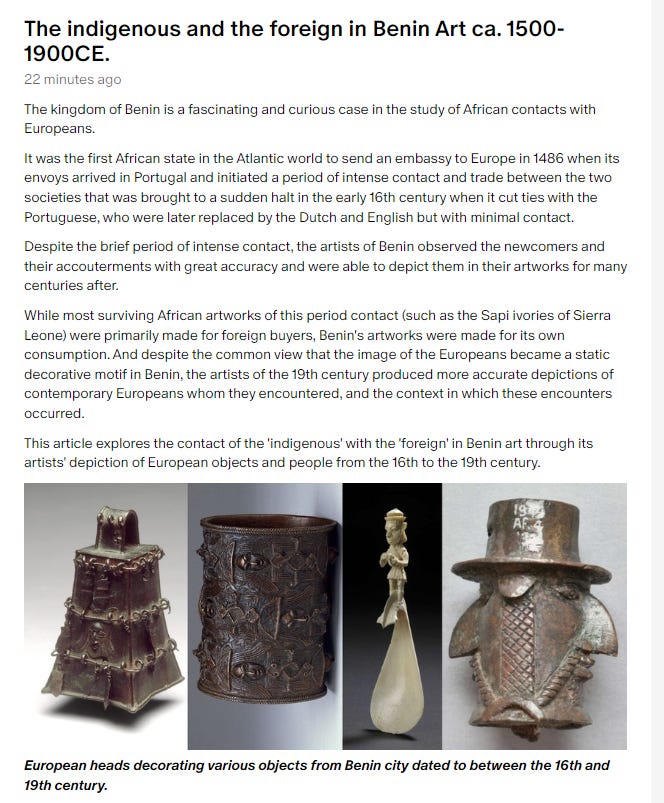](https://substackcdn.com/image/fetch/$s_!Oc7o!,f_auto,q_auto:good,fl_progressive:steep/https%3A%2F%2Fsubstack-post-media.s3.amazonaws.com%2Fpublic%2Fimages%2Ff8edfc6f-59d4-485d-ab2a-9cd496bf3cb1_664x803.png)
* * *
[](https://substackcdn.com/image/fetch/$s_!M5Cz!,f_auto,q_auto:good,fl_progressive:steep/https%3A%2F%2Fsubstack-post-media.s3.amazonaws.com%2Fpublic%2Fimages%2F4a7887f6-b3b1-474f-9bf7-01386579fe34_1184x541.png)
(left) Crowned head from Ife, Nigeria, ca. 14th century (right) Head of Augustus found buried in Meroe, Sudan ca. 25BC.
the [naturalistic artworks of Ife](https://www.africanhistoryextra.com/p/ancient-ife-and-its-masterpieces) were erroneously thought to be the product of an ancient society influenced by Greco-Roman tradition, but besides the similarity in sophistication, the kingdom of Ife had no contact with the ancient Mediterranean.
Thank you for reading African History Extra. This post is public so feel free to share it.
[Share](https://www.africanhistoryextra.com/p/a-brief-note-on-african-agency-in?utm_source=substack&utm_medium=email&utm_content=share&action=share)
Thanks for reading African History Extra! Subscribe for free to receive new posts and support my work.
Subscribe
[](https://substack.com/profile/41533282-dena)[](https://substack.com/profile/128683409-robert-a-mosher-hehim)[](https://substack.com/profile/60073122-boring-brothers-studio)[](https://substack.com/profile/41551885-brad-pearce)[](https://substack.com/profile/10684878-david-perlmutter)
[30 Likes](https://www.africanhistoryextra.com/p/a-brief-note-on-african-agency-in)∙
[2 Restacks](https://substack.com/note/p-144100456/restacks?utm_source=substack&utm_content=facepile-restacks)
30
2
Share
#### Discussion about this post
Comments Restacks

Top Latest Discussions
[Acemoglu in Kongo: a critique of 'Why Nations Fail' and its wilful ignorance of African history.](https://www.africanhistoryextra.com/p/acemoglu-in-kongo-a-critique-of-why)
[There aren’t many Africans on the list of Nobel laureates, nor does research on African societies show up in the selection committees of Stockholm.](https://www.africanhistoryextra.com/p/acemoglu-in-kongo-a-critique-of-why)
Nov 3, 2024•[isaac Samuel](https://substack.com/@isaacsamuel)
111
26
26

[The city states of the Yoruba: a history of pre-colonial West African urbanism (1000-1900 CE)](https://www.africanhistoryextra.com/p/the-city-states-of-the-yoruba-a-history)
[At the close of the 19th century, the Yorùbá region of South-west Nigeria was one of the most urbanized places in Africa.](https://www.africanhistoryextra.com/p/the-city-states-of-the-yoruba-a-history)
Sep 7, 2025•[isaac Samuel](https://substack.com/@isaacsamuel)
59
6
8

[Africans in the Indian Ocean world and the autobiography of a Somali Globetrotter.](https://www.africanhistoryextra.com/p/africans-in-the-indian-ocean-world)
[In 1944, a soldier on Australia’s most remote northern coastline discovered a handful of copper coins that were originally minted in the medieval…](https://www.africanhistoryextra.com/p/africans-in-the-indian-ocean-world)
Aug 17, 2025•[isaac Samuel](https://substack.com/@isaacsamuel)
66
4
11

See all
### Ready for more?
Subscribe
© 2026 isaac Samuel · [Privacy](https://substack.com/privacy) ∙ [Terms](https://substack.com/tos) ∙ [Collection notice](https://substack.com/ccpa#personal-data-collected)
[Start your Substack](https://substack.com/signup?utm_source=substack&utm_medium=web&utm_content=footer)[Get the app](https://substack.com/app/app-store-redirect?utm_campaign=app-marketing&utm_content=web-footer-button)
[Substack](https://substack.com/) is the home for great culture
|
https://www.africanhistoryextra.com/p/a-brief-note-on-african-travel-literature
|
Published Time: 2024-05-26T16:13:01+00:00
a brief note on African travel literature in history
===============
[](https://www.africanhistoryextra.com/)
[African History Extra](https://www.africanhistoryextra.com/)
=============================================================
Subscribe Sign in

Discover more from African History Extra
All about African history; narrating the continent's neglected past
Over 15,000 subscribers
Subscribe
By subscribing, I agree to Substack's [Terms of Use](https://substack.com/tos), and acknowledge its [Information Collection Notice](https://substack.com/ccpa#personal-data-collected) and [Privacy Policy](https://substack.com/privacy).
Already have an account? [Sign in](https://www.africanhistoryextra.com/p/a-brief-note-on-african-travel-literature)
a brief note on African travel literature in history
====================================================
### a Swahili document on south-central Africa.
[](https://substack.com/@isaacsamuel)
[isaac Samuel](https://substack.com/@isaacsamuel)
May 26, 2024
27
2
1
Share
Travel writing constitutes a major primary source for reconstructing African history, and is especially important in supplementing internal accounts.
While much of the African travel literature that historians have access to was written by external visitors, a significant volume of travel literature was composed by African themselves, who were discovering and documenting different parts of their vast continent.
In 1338, [the Ethiopian monk Ēwosṭātēwos' traveled through the Nubian kingdom of Makuria](https://www.patreon.com/posts/africans-africa-83663994) in Sudan with his followers, where they assisted the Nubian king Siti in defeating a rival king. This account of the political rivalries in Nubia which is included in Ēwosṭātēwos' hagiography, matches with internal Nubian records from the same decade, which mention a pretender at its capital of Old Dongola named Kanz al-Dawla and another rebel named Anenaka, both of whom challenged King Siti's authority.
[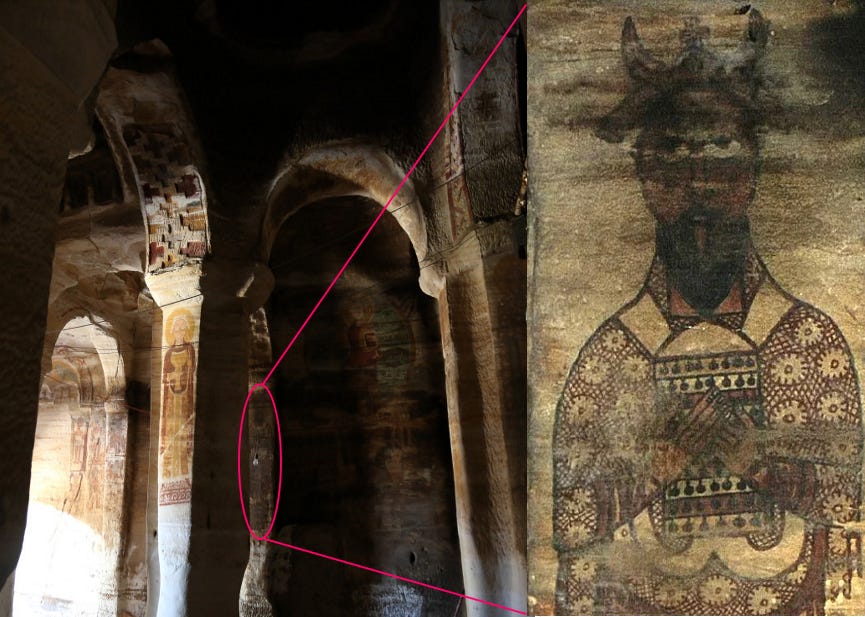](https://substackcdn.com/image/fetch/$s_!wJmF!,f_auto,q_auto:good,fl_progressive:steep/https%3A%2F%2Fsubstack-post-media.s3.amazonaws.com%2Fpublic%2Fimages%2Fa4187323-a986-4b0c-866e-b19bcaea3dff_865x617.png)
_**13th-century painting in the church of Debra Maryam Qorqor in Ethiopia depicting a Nubian dignitary wearing the horned crown of Makuria.**_
In 1432, a family of [Wangara scholars led by Abd al-Rahmán Jakhite left their home in the West African empire of Mali](https://www.africanhistoryextra.com/p/foundations-of-trade-and-education) against the wishes of its emperor and reached the Hausa city of Kano in the late 15th century. The arrival of the Wangara in Kano and their influence on the city's scholarly community was documented by one of their descendants in the Wangara Chronicle written in 1650. The chronicle mentions that the Wangara were given patronage by the Kano king Muhammad Rumfa (r. 1463-1499), and that Jakhite won an intellectual duel with a visiting Egyptian scholar.
[](https://substackcdn.com/image/fetch/$s_!OHAg!,f_auto,q_auto:good,fl_progressive:steep/https%3A%2F%2Fsubstack-post-media.s3.amazonaws.com%2Fpublic%2Fimages%2Fb7819788-05ae-4c8d-ba8e-c4a08fb0facc_784x528.png)
_**street scene in Kano, Nigeria, ca. 1925**_, Bristol Archives
In 1806, [two Ovimbundu traders from the kingdom of Kasanje in west-central Africa traveled across the territories of the Lunda empire](https://www.africanhistoryextra.com/p/trans-continental-trade-in-central) in order to establish a direct route to the Indian Ocean coast at Mozambique. Like many of their neighbors in the kingdom of Kongo, Ndongo, and [Kahenda which had established written traditions](https://www.africanhistoryextra.com/p/state-archives-and-scribal-practices), these traders were literate, and they left a detailed description of their journey to the court of the Lunda King Yavu (r. 1800-1820), and his subordinate king of Kazembe in modern Zambia.
The above examples come from African regions which had a long history of large centralized states, well-established travel routes, and an old tradition of writing. These three factors were central to the emergence of travel writing in Africa since antiquity, and provide crucial evidence for how Africans explored their continent.
In the 19th century, the emergence of large states, trade routes, and literate travelers across south-central Africa led to the production of detailed documentation of the region's societies by other African visitors. The description of south-central Africa written by a traveler from the Swahili coast is the subject of my latest Patreon article,
**please subscribe to read about it here:**
[A DESCRIPTION OF SOUTH-CENTRAL AFRICA](https://www.patreon.com/posts/104845425?pr=true)
[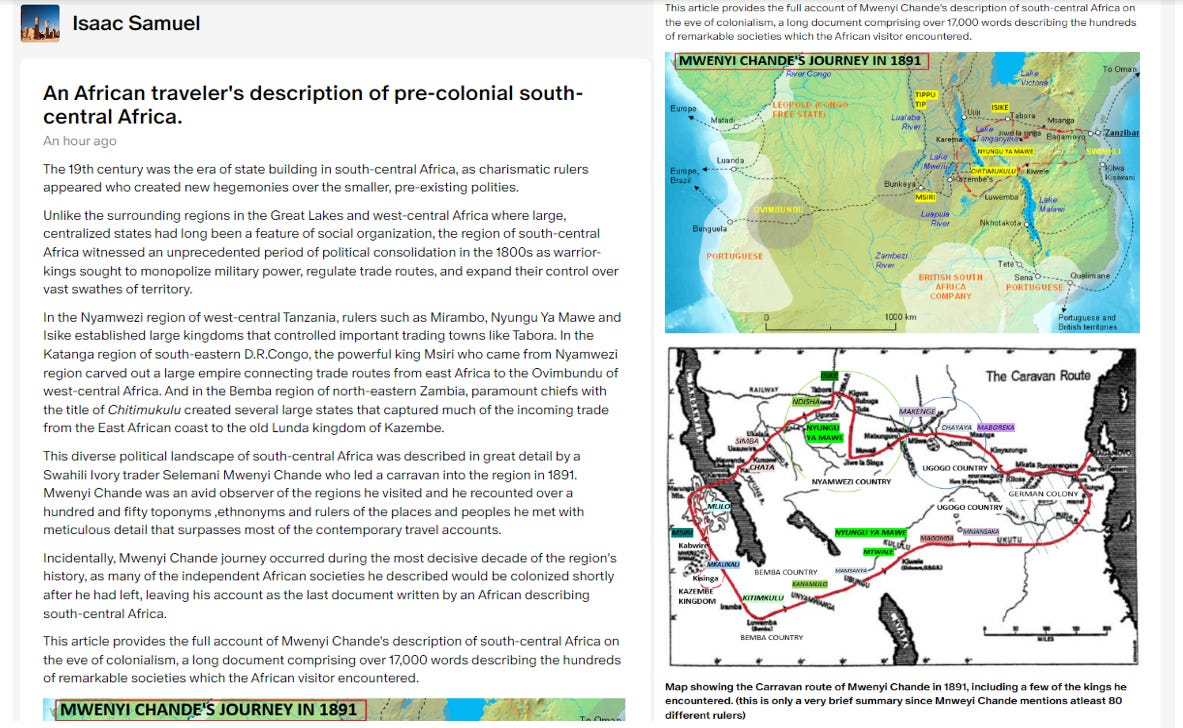](https://substackcdn.com/image/fetch/$s_!5vdX!,f_auto,q_auto:good,fl_progressive:steep/https%3A%2F%2Fsubstack-post-media.s3.amazonaws.com%2Fpublic%2Fimages%2F03906fb9-0e31-4d02-8404-125137f49f4d_1183x728.png)
* * *
[](https://substackcdn.com/image/fetch/$s_!nbuV!,f_auto,q_auto:good,fl_progressive:steep/https%3A%2F%2Fsubstack-post-media.s3.amazonaws.com%2Fpublic%2Fimages%2F9bfed6be-f3af-457b-88bf-20e77a5066f3_458x573.png)
_**Folio from the Gadl (hagiography) of saint Ēwosṭātēwos**_, monastery of Qorqor Māryām
* * *
Thanks for reading African History Extra! Subscribe for free to receive new posts and support my work.
Subscribe
[](https://substack.com/profile/124450168-fenix-fallen)[](https://substack.com/profile/98635331-alton-mark-allen)[](https://substack.com/profile/92520731-ebube-nwafor)[](https://substack.com/profile/86637848-mazz)[](https://substack.com/profile/10684878-david-perlmutter)
[27 Likes](https://www.africanhistoryextra.com/p/a-brief-note-on-african-travel-literature)∙
[1 Restack](https://substack.com/note/p-144994187/restacks?utm_source=substack&utm_content=facepile-restacks)
27
2
1
Share
#### Discussion about this post
Comments Restacks

[](https://substack.com/profile/15696075-heart-and-sol?utm_source=comment)
[Heart & Sol](https://substack.com/profile/15696075-heart-and-sol?utm_source=substack-feed-item)
[Dec 23](https://www.africanhistoryextra.com/p/a-brief-note-on-african-travel-literature/comment/190856829 "Dec 23, 2025, 10:11 AM")
Liked by isaac Samuel
Where can one find the original travelogues (or rather an English translation of them). I would love to read the primary source data.
Expand full comment
[Like (1)](javascript:void(0))[Reply](https://www.africanhistoryextra.com/p/a-brief-note-on-african-travel-literature)[Share](https://www.africanhistoryextra.com/p/a-brief-note-on-african-travel-literature)
[1 reply by isaac Samuel](https://www.africanhistoryextra.com/p/a-brief-note-on-african-travel-literature/comment/190856829)
[1 more comment...](https://www.africanhistoryextra.com/p/a-brief-note-on-african-travel-literature/comments)
Top Latest Discussions
[Acemoglu in Kongo: a critique of 'Why Nations Fail' and its wilful ignorance of African history.](https://www.africanhistoryextra.com/p/acemoglu-in-kongo-a-critique-of-why)
[There aren’t many Africans on the list of Nobel laureates, nor does research on African societies show up in the selection committees of Stockholm.](https://www.africanhistoryextra.com/p/acemoglu-in-kongo-a-critique-of-why)
Nov 3, 2024•[isaac Samuel](https://substack.com/@isaacsamuel)
111
26
26

[The city states of the Yoruba: a history of pre-colonial West African urbanism (1000-1900 CE)](https://www.africanhistoryextra.com/p/the-city-states-of-the-yoruba-a-history)
[At the close of the 19th century, the Yorùbá region of South-west Nigeria was one of the most urbanized places in Africa.](https://www.africanhistoryextra.com/p/the-city-states-of-the-yoruba-a-history)
Sep 7, 2025•[isaac Samuel](https://substack.com/@isaacsamuel)
59
6
8

[Africans in the Indian Ocean world and the autobiography of a Somali Globetrotter.](https://www.africanhistoryextra.com/p/africans-in-the-indian-ocean-world)
[In 1944, a soldier on Australia’s most remote northern coastline discovered a handful of copper coins that were originally minted in the medieval…](https://www.africanhistoryextra.com/p/africans-in-the-indian-ocean-world)
Aug 17, 2025•[isaac Samuel](https://substack.com/@isaacsamuel)
66
4
11

See all
### Ready for more?
Subscribe
© 2026 isaac Samuel · [Privacy](https://substack.com/privacy) ∙ [Terms](https://substack.com/tos) ∙ [Collection notice](https://substack.com/ccpa#personal-data-collected)
[Start your Substack](https://substack.com/signup?utm_source=substack&utm_medium=web&utm_content=footer)[Get the app](https://substack.com/app/app-store-redirect?utm_campaign=app-marketing&utm_content=web-footer-button)
[Substack](https://substack.com/) is the home for great culture
|
https://www.africanhistoryextra.com/p/a-brief-note-on-africas-intellectual
|
Published Time: 2023-09-02T17:02:06+00:00
**a Brief note on Africa's intellectual history
===============
[](https://www.africanhistoryextra.com/)
[African History Extra](https://www.africanhistoryextra.com/)
=============================================================
Subscribe Sign in

Discover more from African History Extra
All about African history; narrating the continent's neglected past
Over 15,000 subscribers
Subscribe
By subscribing, I agree to Substack's [Terms of Use](https://substack.com/tos), and acknowledge its [Information Collection Notice](https://substack.com/ccpa#personal-data-collected) and [Privacy Policy](https://substack.com/privacy).
Already have an account? [Sign in](https://www.africanhistoryextra.com/p/a-brief-note-on-africas-intellectual)
**a Brief note on Africa's intellectual history
===============================================
### plus; the Yoruba intellectual culture ca. 1000-1900.
[](https://substack.com/@isaacsamuel)
[isaac Samuel](https://substack.com/@isaacsamuel)
Sep 02, 2023
25
2
Share
Writing has been a fundamental part of African history since antiquity. The continent is home to some of the world's [oldest and most diverse writing traditions](https://www.africanhistoryextra.com/p/when-africans-wrote-their-own-history); from the ancient scripts of Egypt, Kush and Aksum, to the medieval literature of Nubia, Ethiopia, 'Sudanic’ Africa and the east-African coast.
Scholars in many African societies created vibrant intellectual cultures, producing a vast corpus of literary works including historical chronicles, scientific compositions, theological writings, philosophical treatises and poetry. The intellectual exchanges they fostered resulted in the creation of a closely-knit web of scholary capitals which housed many of the continents most renowned education centers.
It was in these centers of education like [Timbuktu](https://www.patreon.com/posts/timbuktu-history-71077233), Jenne, Sokoto, Sennar, [Gondar](https://www.africanhistoryextra.com/p/global-encounters-and-a-century-of) and Zanzibar, that many of the continent's political and cultural innovations were developed. As scholars exchanged ideas on concepts of theology, politics and social organization, they spawned [new intellectual movements](https://www.africanhistoryextra.com/p/foundations-of-trade-and-education) that were distinctly African in origin. The significance of these African intellectual cultures has only recently begun to receive attention in modern scholarship, which has dispelled the misconception of the "Oral continent par excellence".
And just as the scope of pre-colonial Africa's literary output is now increasingly appreciated, so too has the focus on African societies whose intellectual culture was predominantly oral. While it had long been acknowledged by anthropologists and linguists that the utility of African oral traditions went beyond their use in historiography, its only recently that research has shed more light onto the complexity of African orality.
The oral traditions of African societies are the products of the rich intellectual culture created by diverse communities of 'oral scholars' whose importance cut across all facets of African society. From the royal genealogists who 'recorded' their kingdom's history, to the priests who encoded vast amounts of 'oral literature' about African theologies, to the poets who preserved and transmitted the society's philosophy, the intellectual cultures of oral societies is a fascinating but still poorly understood chapter of African history.
The intellectual history of oral societies is the subject of my latest Patreon article, using the case study of the Yoruba in south-western Nigeria.
read more about it here:
[YORUBA INTELLECTUAL HISTORY](https://www.patreon.com/posts/88655364?pr=true)
[](https://substackcdn.com/image/fetch/$s_!FGk8!,f_auto,q_auto:good,fl_progressive:steep/https%3A%2F%2Fsubstack-post-media.s3.amazonaws.com%2Fpublic%2Fimages%2F79abab6d-dc4e-4f86-ab4a-8d00c5911415_637x1086.png)
* * *
[](https://substackcdn.com/image/fetch/$s_!MDLC!,f_auto,q_auto:good,fl_progressive:steep/https%3A%2F%2Fsubstack-post-media.s3.amazonaws.com%2Fpublic%2Fimages%2Fb4aa58bd-7d32-4c57-adb9-735f58bb6176_3108x2250.jpeg)
Illustration of a ‘Palaver’ (public meeting) not far from Badagry (Nigeria), by William Allen, ca. 1841
Thanks for reading African History Extra! Subscribe for free to receive new posts and support my work.
Subscribe
[](https://substack.com/profile/120566649-brenden)[](https://substack.com/profile/85958432-king-dauod)[](https://substack.com/profile/2048309-njoroge-warui-ii)[](https://substack.com/profile/9772969-oyin-toluhi)[](https://substack.com/profile/5661484-samuel-mather)
[25 Likes](https://www.africanhistoryextra.com/p/a-brief-note-on-africas-intellectual)∙
[2 Restacks](https://substack.com/note/p-136669084/restacks?utm_source=substack&utm_content=facepile-restacks)
25
2
Share
#### Discussion about this post
Comments Restacks

Top Latest Discussions
[Acemoglu in Kongo: a critique of 'Why Nations Fail' and its wilful ignorance of African history.](https://www.africanhistoryextra.com/p/acemoglu-in-kongo-a-critique-of-why)
[There aren’t many Africans on the list of Nobel laureates, nor does research on African societies show up in the selection committees of Stockholm.](https://www.africanhistoryextra.com/p/acemoglu-in-kongo-a-critique-of-why)
Nov 3, 2024•[isaac Samuel](https://substack.com/@isaacsamuel)
111
26
26

[The city states of the Yoruba: a history of pre-colonial West African urbanism (1000-1900 CE)](https://www.africanhistoryextra.com/p/the-city-states-of-the-yoruba-a-history)
[At the close of the 19th century, the Yorùbá region of South-west Nigeria was one of the most urbanized places in Africa.](https://www.africanhistoryextra.com/p/the-city-states-of-the-yoruba-a-history)
Sep 7, 2025•[isaac Samuel](https://substack.com/@isaacsamuel)
59
6
8

[Africans in the Indian Ocean world and the autobiography of a Somali Globetrotter.](https://www.africanhistoryextra.com/p/africans-in-the-indian-ocean-world)
[In 1944, a soldier on Australia’s most remote northern coastline discovered a handful of copper coins that were originally minted in the medieval…](https://www.africanhistoryextra.com/p/africans-in-the-indian-ocean-world)
Aug 17, 2025•[isaac Samuel](https://substack.com/@isaacsamuel)
66
4
11

See all
### Ready for more?
Subscribe
© 2026 isaac Samuel · [Privacy](https://substack.com/privacy) ∙ [Terms](https://substack.com/tos) ∙ [Collection notice](https://substack.com/ccpa#personal-data-collected)
[Start your Substack](https://substack.com/signup?utm_source=substack&utm_medium=web&utm_content=footer)[Get the app](https://substack.com/app/app-store-redirect?utm_campaign=app-marketing&utm_content=web-footer-button)
[Substack](https://substack.com/) is the home for great culture
|
https://www.africanhistoryextra.com/p/a-brief-note-on-contacts-between
|
Published Time: 2024-06-09T16:20:45+00:00
a brief note on contacts between ancient African kingdoms and Rome.
===============
[](https://www.africanhistoryextra.com/)
[African History Extra](https://www.africanhistoryextra.com/)
=============================================================
Subscribe Sign in

Discover more from African History Extra
All about African history; narrating the continent's neglected past
Over 15,000 subscribers
Subscribe
By subscribing, I agree to Substack's [Terms of Use](https://substack.com/tos), and acknowledge its [Information Collection Notice](https://substack.com/ccpa#personal-data-collected) and [Privacy Policy](https://substack.com/privacy).
Already have an account? [Sign in](https://www.africanhistoryextra.com/p/a-brief-note-on-contacts-between)
a brief note on contacts between ancient African kingdoms and Rome.
===================================================================
### finding the lost city of Rhapta on the east African coast.
[](https://substack.com/@isaacsamuel)
[isaac Samuel](https://substack.com/@isaacsamuel)
Jun 09, 2024
27
3
6
Share
Few classical civilizations were as impactful to the foreign contacts of ancient African states and societies like the Roman Empire.
Shortly after Augustus became emperor of Rome, his armies undertook a series of campaigns into the African mainland south of the Mediterranean coast. The first of the Roman campaigns was directed into Nubia around 25BC, [but was defeated by the armies of Kush in 22BC](https://www.africanhistoryextra.com/p/the-meroitic-empire-queen-amanirenas). While the Roman defeat in Nubia permanently ended its ambitions in this region and was concluded with a treaty between Kush's envoys and the emperor on the Greek island Samos in 21BC, Roman campaigns into central Libya beginning in 20BC were relatively successful and the region was gradually incorporated into the empire.
The succeeding era, which is often referred to as '_Pax Romana_', was a dynamic period of trade and cultural exchanges between Rome and the rest of the world, including north-eastern Africa and the Indian Ocean world.
The increase in commercial and diplomatic exchanges between Kush and Roman Egypt contributed to the expansion of the economy of Meroitic Kush, which was one of the sources of gold and ivory exported to Meditteranean markets.[1](https://www.africanhistoryextra.com/p/a-brief-note-on-contacts-between#footnote-1-145467894) By the 1st century CE, Meroe had entered a period of prosperity, with monumental building activity across the cities of the kingdom, as well as a high level of intellectual and artistic production. [The appearance of envoys from Meroe and Roman Egypt in the documentary record of both regions](https://www.patreon.com/posts/africans-in-rome-75714077) demonstrates the close relationship between the two state’s diplomatic and economic interests.
[](https://substackcdn.com/image/fetch/$s_!Sobd!,f_auto,q_auto:good,fl_progressive:steep/https%3A%2F%2Fsubstack-post-media.s3.amazonaws.com%2Fpublic%2Fimages%2Ffeff442e-413c-48ef-9ce1-434a670fece3_705x517.png)
[](https://substackcdn.com/image/fetch/$s_!sbMQ!,f_auto,q_auto:good,fl_progressive:steep/https%3A%2F%2Fsubstack-post-media.s3.amazonaws.com%2Fpublic%2Fimages%2Fbc02237f-7fef-439d-9587-0ecb3514de08_640x433.png)
_**the shrine of Hathor (also called the 'Roman kiosk') at Naqa, Sudan. ca. 1st century CE**_.
_It was constructed by the Meroitic co-rulers Natakamani and Amanitore and served as a ‘transitory’ shrine in front of the larger temple of the Nubian god Apedemak (seen in the background). Its nickname is derived from its mix of Meroitic architecture (like the style used for the Apedemak temple) with Classical elements (like the decoration of the shrine’s columns and arched windows). The Meroitic inscriptions found on the walls of the shrine indicate that it was built by local masons who were likely familiar with aspects of the construction styles of Roman-Egypt or assisted by a few masons from the latter._[2](https://www.africanhistoryextra.com/p/a-brief-note-on-contacts-between#footnote-2-145467894)
* * *
[Share](https://www.africanhistoryextra.com/p/a-brief-note-on-contacts-between?utm_source=substack&utm_medium=email&utm_content=share&action=share)
* * *
The patterns of exchange and trade that characterized _Pax Romana_ would also contribute to the expansion of Aksumite commercial and political activities in the Red Sea region, which was a conduit for the lucrative trade in silk and spices from the Indian Ocean world as well as ivory from the Aksumite hinterland. At the close of the 2nd century, the armies of Aksum were campaigning on the Arabian peninsula and the kingdom’s port city of Adulis had become an important anchorage for merchant ships traveling from Roman-Egypt to the Indian Ocean littoral. These activities would lay the foundation for the success of [Aksumite merchants as intermediaries in the trade between India and Rome](https://www.africanhistoryextra.com/p/the-aksumite-empire-between-rome).
[](https://substackcdn.com/image/fetch/$s_!cMzo!,f_auto,q_auto:good,fl_progressive:steep/https%3A%2F%2Fsubstack-post-media.s3.amazonaws.com%2Fpublic%2Fimages%2F8bf2919f-6977-4011-a801-9fcc425c13be_794x447.gif)
_**Dungur Palace, Aksum, Ethiopia - Reconstruction, by World History Encyclopedia.**_
_This large, multi-story complex was one of several structures that dominated the Aksumite capital and regional towns across the kingdom, and its architectural style was a product of centuries of local developments. The material culture of these elite houses indicates that their occupants had access to luxury goods imported from Rome, including glassware, amphorae, and Roman coins._[3](https://www.africanhistoryextra.com/p/a-brief-note-on-contacts-between#footnote-3-145467894)
The significance of the relationship between Rome and the kingdoms of Kush and Aksum can be gleaned from Roman accounts of world geography in which the cities of Meroe and Aksum are each considered to be a '_**Metropolis**_' —a term reserved for large political and commercial capitals. This term had been used for Meroe since the 5th century BC and Aksum since the 1st century CE, since they were the largest African cities known to the classical writers[4](https://www.africanhistoryextra.com/p/a-brief-note-on-contacts-between#footnote-4-145467894).
However, by the time Ptolemy composed his monumental work on world geography in 150 CE, another African city had been elevated to the status of a Metropolis. This new African metropolis was the **city of Rhapta,**located on the coast of East Africa known as _‘Azania’_, and it was the southernmost center of trade in a chain of port towns that stretched from the eastern coast of Somalia to the northern coast of Mozambique.
**The history of the ancient East African coast and its links to the Roman world are the subject of my latest Patreon article.**
**Please subscribe to read about it here:**
[ANCIENT EAST AFRICA AND THE ROMANS](https://www.patreon.com/posts/105868178)
[](https://substackcdn.com/image/fetch/$s_!QMPv!,f_auto,q_auto:good,fl_progressive:steep/https%3A%2F%2Fsubstack-post-media.s3.amazonaws.com%2Fpublic%2Fimages%2Fa02dc2b6-500a-4e26-bafe-28947296eeef_1102x623.png)
* * *
[](https://substackcdn.com/image/fetch/$s_!-WFj!,f_auto,q_auto:good,fl_progressive:steep/https%3A%2F%2Fsubstack-post-media.s3.amazonaws.com%2Fpublic%2Fimages%2F361130f0-63cc-4739-ba0e-841ca6726865_820x704.png)
_**Fresco with an aithiopian woman presenting ivory to a seated figure (Dido of Carthage) as a personified Africa overlooks**_, from House of Meleager at Pompeii, MAN Napoli 8898, Museo Archaeologico Nazionale, Naples
Thanks for reading African History Extra! Subscribe for free to receive new posts and support my work.
Subscribe
[1](https://www.africanhistoryextra.com/p/a-brief-note-on-contacts-between#footnote-anchor-1-145467894)
The Kingdom of Kush: Handbook of the Napatan-Meroitic Civilization pg 461-465, 398), The Image of the Ordered World in Ancient Nubian Art pg 466-467
[2](https://www.africanhistoryextra.com/p/a-brief-note-on-contacts-between#footnote-anchor-2-145467894)
Hellenizing Art in Ancient Nubia 300 BC–AD 250 and its Egyptian Models: A Study in “Acculturation” by László Török pg 301-308
[3](https://www.africanhistoryextra.com/p/a-brief-note-on-contacts-between#footnote-anchor-3-145467894)
Foundations of an African Civilization: Aksum & the Northern Horn By D. W. Phillipson pg 121-125, 197-200
[4](https://www.africanhistoryextra.com/p/a-brief-note-on-contacts-between#footnote-anchor-4-145467894)
Aksum and Nubia: Warfare, Commerce, and Political Fictions in Ancient Northeast Africa By George Hatke pg 29, Foundations of an African Civilization: Aksum & the Northern Horn By D. W. Phillipson pg 121
* * *
#### Subscribe to African History Extra
By isaac Samuel · Launched 4 years ago
All about African history; narrating the continent's neglected past
Subscribe
By subscribing, I agree to Substack's [Terms of Use](https://substack.com/tos), and acknowledge its [Information Collection Notice](https://substack.com/ccpa#personal-data-collected) and [Privacy Policy](https://substack.com/privacy).
[](https://substack.com/profile/39555188-timothy-burke)[](https://substack.com/profile/98635331-alton-mark-allen)[](https://substack.com/profile/29353584-samoan62)[](https://substack.com/profile/429481-jordan-c-t)[](https://substack.com/profile/10684878-david-perlmutter)
[27 Likes](https://www.africanhistoryextra.com/p/a-brief-note-on-contacts-between)∙
[6 Restacks](https://substack.com/note/p-145467894/restacks?utm_source=substack&utm_content=facepile-restacks)
27
3
6
Share
#### Discussion about this post
Comments Restacks

[](https://substack.com/profile/128683409-robert-a-mosher-hehim?utm_source=comment)
[Robert A Mosher (he/him)](https://substack.com/profile/128683409-robert-a-mosher-hehim?utm_source=substack-feed-item)
[Jun 10, 2024](https://www.africanhistoryextra.com/p/a-brief-note-on-contacts-between/comment/58676157 "Jun 10, 2024, 1:43 PM")
Liked by isaac Samuel
My high school Latin teachers presented “ambassadors” as hostages for the good behavior of the heads of state they represented. I was quite happy that such an attitude is no longer generally applied.
Expand full comment
[Like (1)](javascript:void(0))[Reply](https://www.africanhistoryextra.com/p/a-brief-note-on-contacts-between)[Share](https://www.africanhistoryextra.com/p/a-brief-note-on-contacts-between)
[](https://substack.com/profile/128683409-robert-a-mosher-hehim?utm_source=comment)
[Robert A Mosher (he/him)](https://substack.com/profile/128683409-robert-a-mosher-hehim?utm_source=substack-feed-item)
[Jun 10, 2024](https://www.africanhistoryextra.com/p/a-brief-note-on-contacts-between/comment/58672531 "Jun 10, 2024, 1:03 PM")
Liked by isaac Samuel
I know that our modern ideas about diplomacy date from The Treaty of Westphalia and the Congress of Vienna, but now I wonder if there was a diplomatic corps hanging around Rome?
Expand full comment
[Like (1)](javascript:void(0))[Reply](https://www.africanhistoryextra.com/p/a-brief-note-on-contacts-between)[Share](https://www.africanhistoryextra.com/p/a-brief-note-on-contacts-between)
[1 reply by isaac Samuel](https://www.africanhistoryextra.com/p/a-brief-note-on-contacts-between/comment/58672531)
[1 more comment...](https://www.africanhistoryextra.com/p/a-brief-note-on-contacts-between/comments)
Top Latest Discussions
[Acemoglu in Kongo: a critique of 'Why Nations Fail' and its wilful ignorance of African history.](https://www.africanhistoryextra.com/p/acemoglu-in-kongo-a-critique-of-why)
[There aren’t many Africans on the list of Nobel laureates, nor does research on African societies show up in the selection committees of Stockholm.](https://www.africanhistoryextra.com/p/acemoglu-in-kongo-a-critique-of-why)
Nov 3, 2024•[isaac Samuel](https://substack.com/@isaacsamuel)
111
26
26

[The city states of the Yoruba: a history of pre-colonial West African urbanism (1000-1900 CE)](https://www.africanhistoryextra.com/p/the-city-states-of-the-yoruba-a-history)
[At the close of the 19th century, the Yorùbá region of South-west Nigeria was one of the most urbanized places in Africa.](https://www.africanhistoryextra.com/p/the-city-states-of-the-yoruba-a-history)
Sep 7, 2025•[isaac Samuel](https://substack.com/@isaacsamuel)
59
6
8

[Africans in the Indian Ocean world and the autobiography of a Somali Globetrotter.](https://www.africanhistoryextra.com/p/africans-in-the-indian-ocean-world)
[In 1944, a soldier on Australia’s most remote northern coastline discovered a handful of copper coins that were originally minted in the medieval…](https://www.africanhistoryextra.com/p/africans-in-the-indian-ocean-world)
Aug 17, 2025•[isaac Samuel](https://substack.com/@isaacsamuel)
66
4
11

See all
### Ready for more?
Subscribe
© 2026 isaac Samuel · [Privacy](https://substack.com/privacy) ∙ [Terms](https://substack.com/tos) ∙ [Collection notice](https://substack.com/ccpa#personal-data-collected)
[Start your Substack](https://substack.com/signup?utm_source=substack&utm_medium=web&utm_content=footer)[Get the app](https://substack.com/app/app-store-redirect?utm_campaign=app-marketing&utm_content=web-footer-button)
[Substack](https://substack.com/) is the home for great culture
|
https://www.africanhistoryextra.com/p/a-brief-note-on-ethnicity-and-the
|
Published Time: 2024-05-12T16:59:08+00:00
a brief note on Ethnicity and the State in Africa
===============
[](https://www.africanhistoryextra.com/)
[African History Extra](https://www.africanhistoryextra.com/)
=============================================================
Subscribe Sign in

Discover more from African History Extra
All about African history; narrating the continent's neglected past
Over 15,000 subscribers
Subscribe
By subscribing, I agree to Substack's [Terms of Use](https://substack.com/tos), and acknowledge its [Information Collection Notice](https://substack.com/ccpa#personal-data-collected) and [Privacy Policy](https://substack.com/privacy).
Already have an account? [Sign in](https://www.africanhistoryextra.com/p/a-brief-note-on-ethnicity-and-the)
a brief note on Ethnicity and the State in Africa
=================================================
### the evolution of the Tutsi/Hutu dichotomy in the precolonial Great Lakes.
[](https://substack.com/@isaacsamuel)
[isaac Samuel](https://substack.com/@isaacsamuel)
May 12, 2024
30
Share
Africa is often considered the most culturally diverse continent, a fact that is thought to significantly influence state development.
However, the identification and study of cultures and social complexity in pre-colonial African societies has hardly been known for its conceptual clarity and scientific rigour. In the early 20th century, colonial authorities confronted with the diversity of their subject population set about the task of classifying them inorder to determine the 'true rulers' of the past so they could add the legitimacy of tradition to the colony's 'Native Authority.'[1](https://www.africanhistoryextra.com/p/a-brief-note-on-ethnicity-and-the#footnote-1-144553052)
Urged on by the colonial authorities, early anthropologists and linguists described cultures, languages, and ethnicities as discrete, bounded groups, whose distribution could be captured on an 'ethnic map' such as George Murdock's now infamous 1959 map of African "tribes". Similarly, early historians of Africa were preoccupied with finding the 'true origins' of these groups, their migration to their present territories, and the innovations they supposedly carried with them.[2](https://www.africanhistoryextra.com/p/a-brief-note-on-ethnicity-and-the#footnote-2-144553052)
The disciplines of anthropology, linguistics, and history in Africa have since come a long way from their problematic foundations. Cultures and ethnicities[3](https://www.africanhistoryextra.com/p/a-brief-note-on-ethnicity-and-the#footnote-3-144553052) are now understood to be more fluid and variable social constructs that shape and are shaped by historical processes of social change and evolution. This new approach to Africa's social history has also revealed that languages are not the sole indicators of culture, since linguistic differences alone can’t determine social interactions.[4](https://www.africanhistoryextra.com/p/a-brief-note-on-ethnicity-and-the#footnote-4-144553052)
Most African states and societies were recognizably heterogeneous —from small [kingdoms like Kuba](https://www.africanhistoryextra.com/p/the-art-of-power-in-central-africa) to [large empires like Mali](https://www.africanhistoryextra.com/p/the-mali-empire-a-complete-history)— and interactions between different social groups could occur across multiple cultural zones. The existence of 'diasporic communities' across a vast region such as the [Hausa diaspora](https://www.africanhistoryextra.com/p/the-creation-of-an-african-lingua) and the [Wangara diaspora](https://www.africanhistoryextra.com/p/foundations-of-trade-and-education) in West Africa, and the [Swahili diaspora](https://www.africanhistoryextra.com/p/economic-growth-and-cultural-synchretism) in East Africa, also indicates that cultural convergence between different African societies wasn't infrequent, and could be facilitated by trade, religion and the state.
[](https://substackcdn.com/image/fetch/$s_!Dg-a!,f_auto,q_auto:good,fl_progressive:steep/https%3A%2F%2Fsubstack-post-media.s3.amazonaws.com%2Fpublic%2Fimages%2F953c901a-de3b-4db8-9d26-3d8984826452_633x839.png)
‘ethnic’ groups in the Mali empire (approx. 1 million sqkm) and the Kuba kingdom (approx. 27,000 sqkm).[5](https://www.africanhistoryextra.com/p/a-brief-note-on-ethnicity-and-the#footnote-5-144553052)
As one historian succinctly puts it; _**"Political and ethnic boundaries rarely coincided in pre-colonial Africa. Human ambitions were too pressing to allow people to remain static over long periods. States expanded when they were sufficiently powerful to do so. Communities competed with one another to attract settlers and thereby gain supporters."**_[6](https://www.africanhistoryextra.com/p/a-brief-note-on-ethnicity-and-the#footnote-6-144553052)
Ethnicities and cultures are therefore historical and not primordial phenomena. One of the most profound examples of the historical evolution of social identities in Africa comes from the Great Lakes region of East Africa, where the social divisions of Tutsi/Hima and Hutu/Iru have been particularly significant in shaping the history of states and societies from the colonial period to the present day, especially in the kingdoms of Rwanda and Nkore.
**The history of the Tutsi/Hima and Hutu/Iru dichotomy is the subject of my latest Patreon article.**
**please subscribe to read about it here:**
[Evolution of the Tutsi/Hutu dichotomy](https://www.patreon.com/posts/104058904)
[](https://substackcdn.com/image/fetch/$s_!QV0B!,f_auto,q_auto:good,fl_progressive:steep/https%3A%2F%2Fsubstack-post-media.s3.amazonaws.com%2Fpublic%2Fimages%2F30c9fc82-47df-4b20-b01b-42d0a1a0be47_663x1193.png)
* * *
[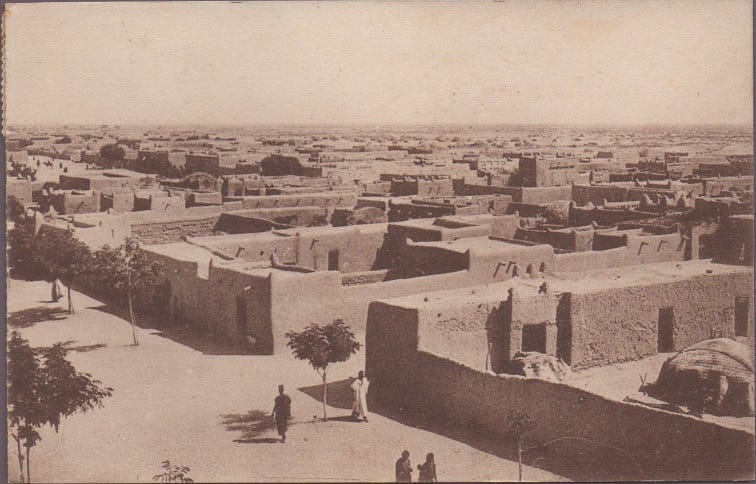](https://substackcdn.com/image/fetch/$s_!b5ZF!,f_auto,q_auto:good,fl_progressive:steep/https%3A%2F%2Fsubstack-post-media.s3.amazonaws.com%2Fpublic%2Fimages%2F52169126-e1cc-4af1-9535-6001250b2595_756x484.png)
_**street scene in Gao, Mali**_, ca. 1935, ANOM.
The city’s population was linguistically diverse, including speakers of the languages of Songhay, Fula, and Tamashek.
[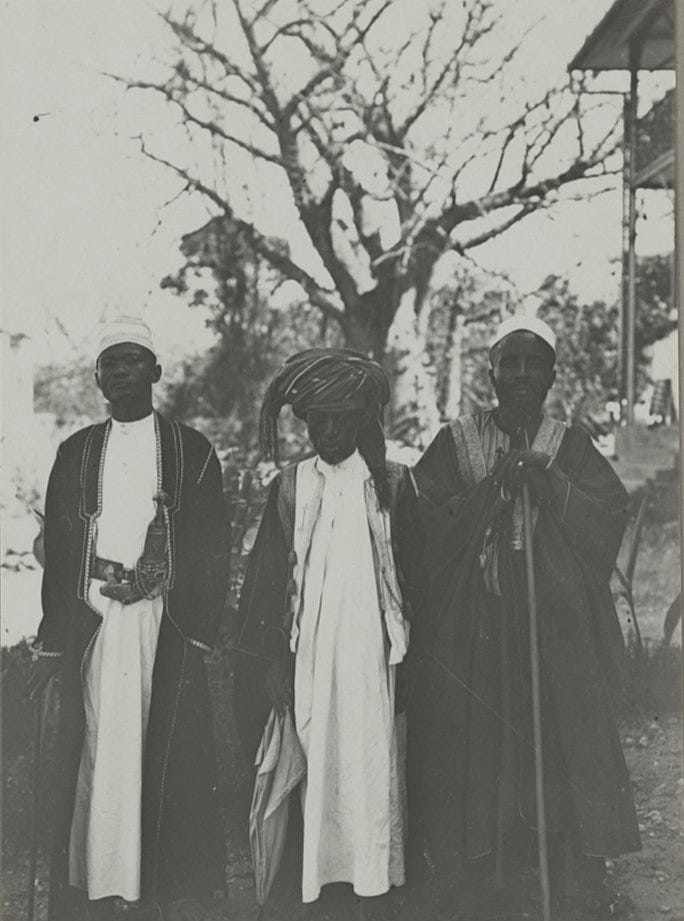](https://substackcdn.com/image/fetch/$s_!s7kb!,f_auto,q_auto:good,fl_progressive:steep/https%3A%2F%2Fsubstack-post-media.s3.amazonaws.com%2Fpublic%2Fimages%2Fdeeaa579-4b59-4f6f-b3d6-37492ac466f5_684x921.jpeg)
a group of Comorians settled in the trading city of Majunga, Madagascar, ca. 1904, Quai Branly Museum.
* * *
Thanks for reading African History Extra! Subscribe for free to receive new posts and support my work.
Subscribe
[1](https://www.africanhistoryextra.com/p/a-brief-note-on-ethnicity-and-the#footnote-anchor-1-144553052)
Ethnic Groups and the State edited by Paul R. Brass pg 65-83
[2](https://www.africanhistoryextra.com/p/a-brief-note-on-ethnicity-and-the#footnote-anchor-2-144553052)
Genetics and the Unsettled Past: The Collision of DNA, Race, and History edited by Keith Wailoo, Alondra Nelson, Catherine Lee pg 68-78, What Do You Mean There Were No Tribes in Africa?: Thoughts on Boundaries and Related Matters In Precolonial Africa by DR Wright pg 419-426, The Archaeology of Africa: Food, Metals and Towns edited by Bassey Andah, Alex Okpoko, Thurstan Shaw, Paul Sinclair pg 1-10.
[3](https://www.africanhistoryextra.com/p/a-brief-note-on-ethnicity-and-the#footnote-anchor-3-144553052)
at its most basic definition; **ethnicity** is a social group, **culture** is a way of life, and **states**/kingdoms/empires are a form of organized society. These concepts can overlap or diverge depending on the context.
[4](https://www.africanhistoryextra.com/p/a-brief-note-on-ethnicity-and-the#footnote-anchor-4-144553052)
Africa and Africans in the Making of the Atlantic World, 1400-1800 By John Kelly Thornton pg 184-189
[5](https://www.africanhistoryextra.com/p/a-brief-note-on-ethnicity-and-the#footnote-anchor-5-144553052)
Maps by Nehemiah Levtzion and Jan Vansina
[6](https://www.africanhistoryextra.com/p/a-brief-note-on-ethnicity-and-the#footnote-anchor-6-144553052)
Precolonial Legacies in Postcolonial Politics By Martha Wilfahrt pg 50
* * *
#### Subscribe to African History Extra
By isaac Samuel · Launched 4 years ago
All about African history; narrating the continent's neglected past
Subscribe
By subscribing, I agree to Substack's [Terms of Use](https://substack.com/tos), and acknowledge its [Information Collection Notice](https://substack.com/ccpa#personal-data-collected) and [Privacy Policy](https://substack.com/privacy).
[](https://substack.com/profile/85895387-kwame)[](https://substack.com/profile/79514371-michelle-plunkett-cole)[](https://substack.com/profile/191548301-racord)[](https://substack.com/profile/29353584-samoan62)[](https://substack.com/profile/10684878-david-perlmutter)
[30 Likes](https://www.africanhistoryextra.com/p/a-brief-note-on-ethnicity-and-the)
[](https://substack.com/note/p-144553052/restacks?utm_source=substack&utm_content=facepile-restacks)
30
Share
#### Discussion about this post
Comments Restacks

Top Latest Discussions
[Acemoglu in Kongo: a critique of 'Why Nations Fail' and its wilful ignorance of African history.](https://www.africanhistoryextra.com/p/acemoglu-in-kongo-a-critique-of-why)
[There aren’t many Africans on the list of Nobel laureates, nor does research on African societies show up in the selection committees of Stockholm.](https://www.africanhistoryextra.com/p/acemoglu-in-kongo-a-critique-of-why)
Nov 3, 2024•[isaac Samuel](https://substack.com/@isaacsamuel)
111
26
26

[The city states of the Yoruba: a history of pre-colonial West African urbanism (1000-1900 CE)](https://www.africanhistoryextra.com/p/the-city-states-of-the-yoruba-a-history)
[At the close of the 19th century, the Yorùbá region of South-west Nigeria was one of the most urbanized places in Africa.](https://www.africanhistoryextra.com/p/the-city-states-of-the-yoruba-a-history)
Sep 7, 2025•[isaac Samuel](https://substack.com/@isaacsamuel)
59
6
8

[Africans in the Indian Ocean world and the autobiography of a Somali Globetrotter.](https://www.africanhistoryextra.com/p/africans-in-the-indian-ocean-world)
[In 1944, a soldier on Australia’s most remote northern coastline discovered a handful of copper coins that were originally minted in the medieval…](https://www.africanhistoryextra.com/p/africans-in-the-indian-ocean-world)
Aug 17, 2025•[isaac Samuel](https://substack.com/@isaacsamuel)
66
4
11

See all
### Ready for more?
Subscribe
© 2026 isaac Samuel · [Privacy](https://substack.com/privacy) ∙ [Terms](https://substack.com/tos) ∙ [Collection notice](https://substack.com/ccpa#personal-data-collected)
[Start your Substack](https://substack.com/signup?utm_source=substack&utm_medium=web&utm_content=footer)[Get the app](https://substack.com/app/app-store-redirect?utm_campaign=app-marketing&utm_content=web-footer-button)
[Substack](https://substack.com/) is the home for great culture
|
https://www.africanhistoryextra.com/p/a-brief-note-on-european-and-african
|
Published Time: 2024-02-18T14:05:06+00:00
a brief note on European and African perspectives in travel literature
===============
[](https://www.africanhistoryextra.com/)
[African History Extra](https://www.africanhistoryextra.com/)
=============================================================
Subscribe Sign in

Discover more from African History Extra
All about African history; narrating the continent's neglected past
Over 15,000 subscribers
Subscribe
By subscribing, I agree to Substack's [Terms of Use](https://substack.com/tos), and acknowledge its [Information Collection Notice](https://substack.com/ccpa#personal-data-collected) and [Privacy Policy](https://substack.com/privacy).
Already have an account? [Sign in](https://www.africanhistoryextra.com/p/a-brief-note-on-european-and-african)
a brief note on European and African perspectives in travel literature
======================================================================
### A Hausa explorer of western Europe.
[](https://substack.com/@isaacsamuel)
[isaac Samuel](https://substack.com/@isaacsamuel)
Feb 18, 2024
22
Share
The study of written history is in many ways, a study of perspectives.
In the parts of Africa where the most accessible accounts about the region’s past used to be the travel literature of European visitors, the study of African history was a study of European perspectives of Africa. The Eurocentric perspective of travelers such as James Bruce in 18th century Ethiopia, and Heinrich Barth in 19th century West Africa, informed much of their understanding of African societies.
However, there are a few sections in these European travelogues in which the African perspective of their guests is reproduced, revealing how the Europeans were seen by their hosts.
The Scottish traveler James Bruce, who visited Ethiopia in order to find the source of the Nile, was hospitably received by the ruling Empress Mentewwab at her palace in QwesQwam near Gondar. But the empress found Bruce's reasons for travel to be rather odd; remarking to Bruce that **"life furnishes us with the perverseness and contradiction of human nature!, You have come from Jerusalem, through vile Turkish governments, and hot, unwholesome climates, to see a river and a bog, no part of which you can carry away."**
[](https://substackcdn.com/image/fetch/$s_!bEoB!,f_auto,q_auto:good,fl_progressive:steep/https%3A%2F%2Fsubstack-post-media.s3.amazonaws.com%2Fpublic%2Fimages%2Fb9b1790c-cff2-4287-a939-cf67c50b6ecc_887x496.png)
_**Ruins of Empress Mentewab's QwesQwam complex near Gondar, Ethiopia.**_
It’s interesting that Mentewwab's critique of the main objective of James Bruce's entire adventure was retained. The queen wished to visit Jerusalem, which Bruce and many Ethiopian pilgrims had been to, but the Scottish traveler only wished to see the source of the Nile, which from Mentewwab's perspective was a frivolous goal. While the opinions of the African hosts about the European travelers were mostly positive, such as Heinrich Barth's stay in the west African states of Bornu and Sokoto, some instances of conflict blighted African perceptions of the European visitors, and by extension, of European society.
During his stay in Timbuktu around 1851, Heinrich Barth was not so hospitably received by the Fulbe authorities of the [Massina empire](https://www.africanhistoryextra.com/p/a-history-of-the-massina-empire-1818), whose control over the city was contested by the Tuaregs. One Massina officer repeatedly pestered the German traveler with "insulting language". Barth writes that this Massina officer **"Spoke of the Christians**[Europeans]**in the most contemptuous manner, describing them as sitting like women in the bottom of their steamboats, and doing nothing but eating raw eggs; concluding with the paradoxical statement, which is not very flattering to Europeans, that the idolatrous Bambara**[of Segu]**were far better people and much farther advanced in civilization than the Christians."**
The conflict between Massina and the Tuaregs near Timbuktu who protected Barth, likely influenced the Massina officer's negative opinion of European society, which he ranked lower than his 'pagan' rivals, the Bambara of Segu. Barth also blamed Mungo Park for propagating the stereotype that Europeans were fond of raw eggs, something that was disliked by their West African guests.
[](https://substackcdn.com/image/fetch/$s_!rsru!,f_auto,q_auto:good,fl_progressive:steep/https%3A%2F%2Fsubstack-post-media.s3.amazonaws.com%2Fpublic%2Fimages%2F026216ee-6472-417e-8b14-cbe19064752d_874x552.png)
_**Colorized engraving of Heinrich Barth's arrival at Timbuktu in 1853**_
Just like most European writers had formulated their perspective of Africa without actually traveling to the continent, similar perceptions about European society were mostly made by Africans who hadn't been there. Fortunately, a number of African travelers who had been visiting Europe began documenting their accounts in the 19th century, forming a more accurate perspective of European society.
One such remarkable account was left by the [Comorian traveler Selim Abakari who visited Germany and Russia in 1896](https://www.patreon.com/posts/66837157), providing both an African perspective of Europe, and his European hosts' perspective of their African guest.
For example, Selim notes that after refusing to order wine and pork, the servants of the Hotel where he was staying in st. Petersburg revealed that they were also Muslims to the astonishment of Selim, who wrote of the encounter; **"I remained silent! So in the countries of the whites, there were such Muslims!."**
Traveling across the Russian countryside, he encountered people in Kalmykia who revered him as one of their spirits **"who had landed from his mountain,"** He met people in Samara who fled from him **"thinking he was the devil,"** and people in Semipalatinsk who **"acclaimed him as a King"** and thought he was the leader of his white companions.
Selim's account is one of a handful of travelogues by Africans who visited Europe, but it’s mostly concerned with northern Europe. A few decades before Selim embarked on his journey, an adventurous African visitor from the Hausalands traveled to England and Germany, providing a rare description of Western European society by an African.
The account of this Hausa traveler in Western Europe and his observations of European society are the subject of my latest Patreon article,
Please subscribe to read about it here:
[The Hausa explorer of western Europe](https://www.patreon.com/posts/hausa-travelers-98642300)
[](https://substackcdn.com/image/fetch/$s_!MlgY!,f_auto,q_auto:good,fl_progressive:steep/https%3A%2F%2Fsubstack-post-media.s3.amazonaws.com%2Fpublic%2Fimages%2Fda222985-3fda-4ee6-b56a-f61be1fc91a2_848x687.png)
* * *
Thanks for reading African History Extra! Subscribe for free to receive new posts and support my work.
Subscribe
[](https://substack.com/profile/31627868-michael-atkinson)[](https://substack.com/profile/10684878-david-perlmutter)[](https://substack.com/profile/29353584-samoan62)[](https://substack.com/profile/128683409-robert-a-mosher-hehim)[](https://substack.com/profile/72923580-luciano-pollichieni)
[22 Likes](https://www.africanhistoryextra.com/p/a-brief-note-on-european-and-african)
[](https://substack.com/note/p-141787774/restacks?utm_source=substack&utm_content=facepile-restacks)
22
Share
#### Discussion about this post
Comments Restacks

Top Latest Discussions
[Acemoglu in Kongo: a critique of 'Why Nations Fail' and its wilful ignorance of African history.](https://www.africanhistoryextra.com/p/acemoglu-in-kongo-a-critique-of-why)
[There aren’t many Africans on the list of Nobel laureates, nor does research on African societies show up in the selection committees of Stockholm.](https://www.africanhistoryextra.com/p/acemoglu-in-kongo-a-critique-of-why)
Nov 3, 2024•[isaac Samuel](https://substack.com/@isaacsamuel)
111
26
26

[The city states of the Yoruba: a history of pre-colonial West African urbanism (1000-1900 CE)](https://www.africanhistoryextra.com/p/the-city-states-of-the-yoruba-a-history)
[At the close of the 19th century, the Yorùbá region of South-west Nigeria was one of the most urbanized places in Africa.](https://www.africanhistoryextra.com/p/the-city-states-of-the-yoruba-a-history)
Sep 7, 2025•[isaac Samuel](https://substack.com/@isaacsamuel)
59
6
8

[Africans in the Indian Ocean world and the autobiography of a Somali Globetrotter.](https://www.africanhistoryextra.com/p/africans-in-the-indian-ocean-world)
[In 1944, a soldier on Australia’s most remote northern coastline discovered a handful of copper coins that were originally minted in the medieval…](https://www.africanhistoryextra.com/p/africans-in-the-indian-ocean-world)
Aug 17, 2025•[isaac Samuel](https://substack.com/@isaacsamuel)
66
4
11

See all
### Ready for more?
Subscribe
© 2026 isaac Samuel · [Privacy](https://substack.com/privacy) ∙ [Terms](https://substack.com/tos) ∙ [Collection notice](https://substack.com/ccpa#personal-data-collected)
[Start your Substack](https://substack.com/signup?utm_source=substack&utm_medium=web&utm_content=footer)[Get the app](https://substack.com/app/app-store-redirect?utm_campaign=app-marketing&utm_content=web-footer-button)
[Substack](https://substack.com/) is the home for great culture
|
End of preview. Expand
in Data Studio
README.md exists but content is empty.
- Downloads last month
- 16